Back to list

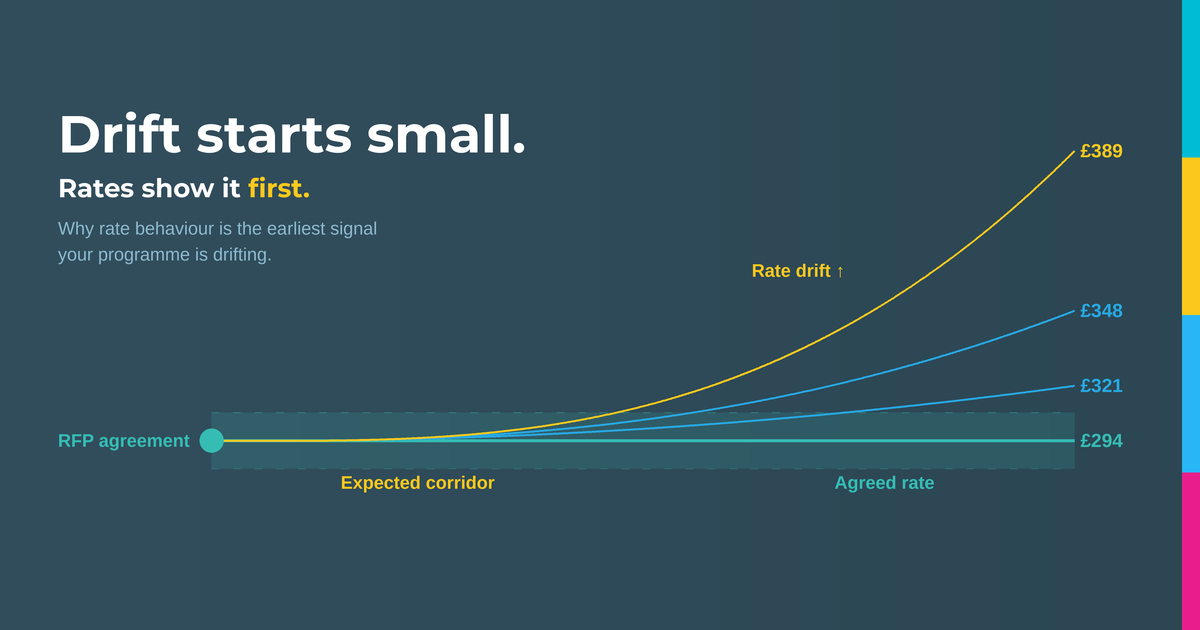
Why Rate Behaviour Is the Earliest Signal Your Programme Is Drifting
The problem rarely starts where we think it does. Rate inconsistency has become one of the most widely discussed challenges in corporate accommodation. Buyers encounter missing negotiated rates. Public channels sometimes display lower prices. Booking platforms show different outcomes for the same programme.
These situations feel familiar — and often frustrating. Yet organisations frequently treat them as isolated operational problems instead of interpreting them as behavioural signals within the programme itself.
That distinction matters far more than it first appears.
Why Does Rate Inconsistency Feel Like a Problem to Solve?
Across the industry, buyers and hotels describe a similar experience: rates do not always behave as expected.
For buyers, this creates uncertainty around whether negotiated value consistently reaches travellers. Hotels face a different challenge. Teams must manage pricing, availability, and distribution across multiple systems, markets, and channels simultaneously.
As a result, many organisations assume something has gone wrong.
In reality, rate inconsistency often reveals something much more important.
It shows programme behaviour becoming visible.
What Does Rate Behaviour Actually Represent?
A single rate point captures only a moment in time. Rate behaviour tells a much broader story.
The way rates appear, shift, align, or diverge across channels reflects how availability is managed, how pricing logic operates, and how distribution systems interact with one another.
It also reveals how programme rules translate into operational reality.
In this sense, rate behaviour is not simply an output of the programme. It is one of the clearest expressions of how the programme actively functions in market conditions.
What Is Programme Drift — And Why Does It Matter?
At the sourcing stage, programmes usually begin with alignment. Buyers and suppliers agree rates or discounts. Teams define availability rules. Distribution pathways are understood.
However, accommodation programmes do not remain static once the RFP process ends.
Market conditions shift. Availability changes. Systems behave differently across channels. Local operational decisions gradually move away from central programme intent.
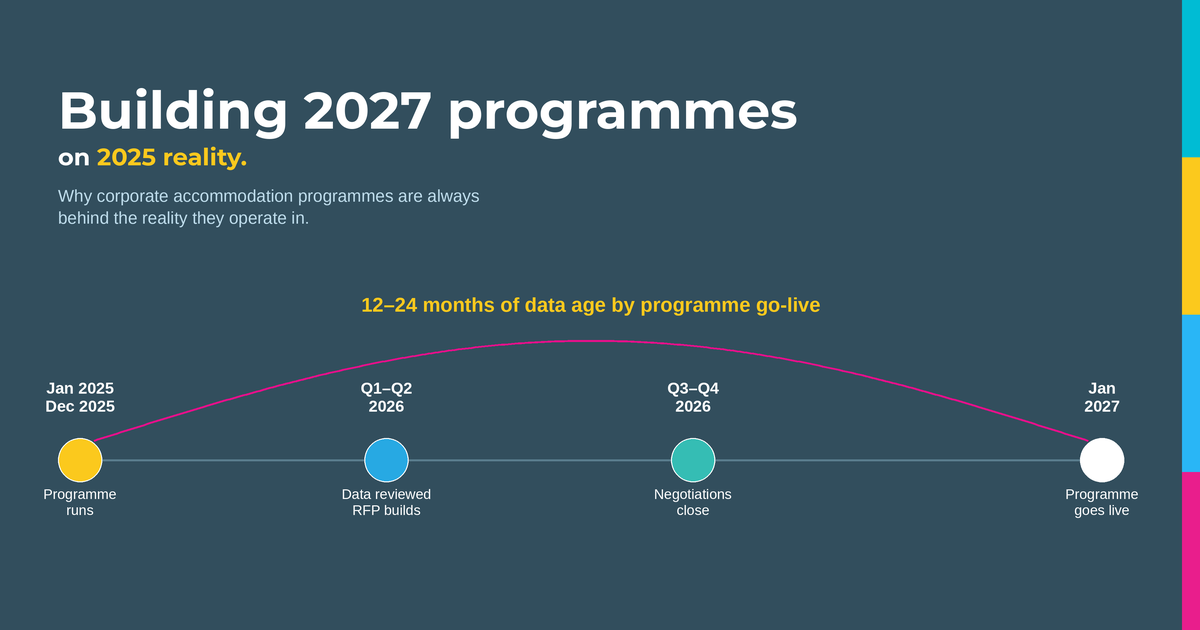
Most importantly, much of this movement happens quietly during the active programme cycle, long after sourcing decisions have been finalised.
As explored in our earlier article, Corporate Accommodation Programmes Are Continuous — Not Cyclical, programmes continue evolving long after sourcing concludes.
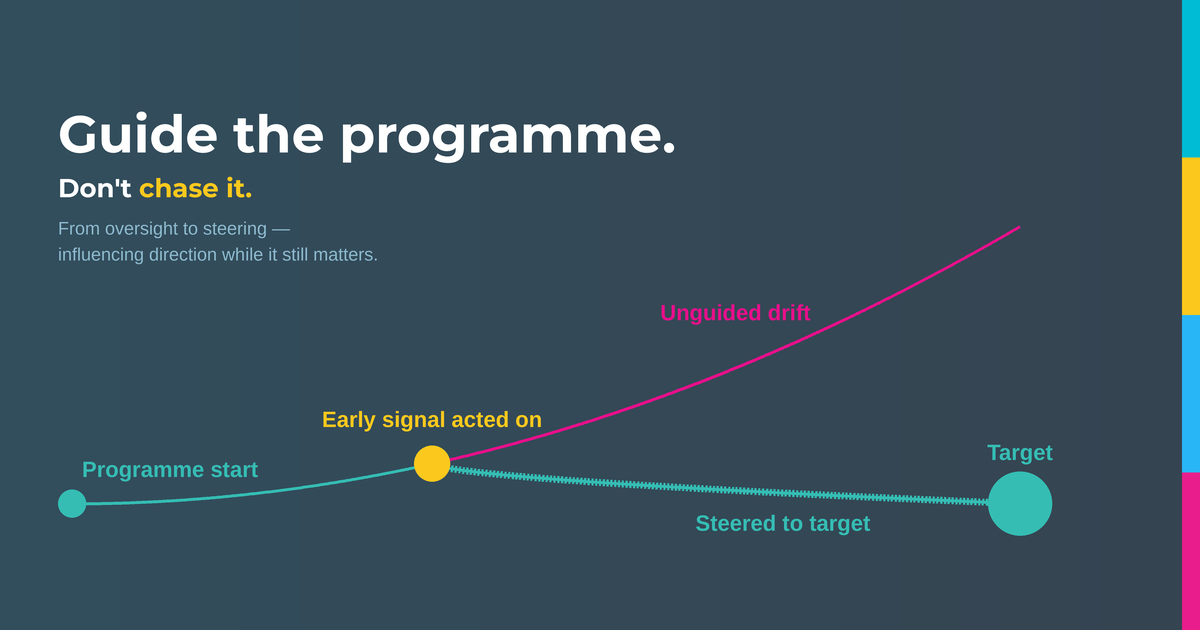
Individually, these shifts may appear insignificant. Collectively, they create something more consequential: programme drift.
Programme drift describes the gradual misalignment between how a programme was designed and how it actually operates in the market.
Why Is Programme Drift So Difficult to Detect?
Programme drift rarely appears all at once. Instead, it builds gradually over time.
One channel may load a rate differently. A property may behave inconsistently across booking windows. Availability patterns may begin moving outside expected parameters.
Individually, each moment feels manageable. Teams can rationalise isolated inconsistencies easily. Most reporting structures also struggle to surface these signals early enough to influence decisions.
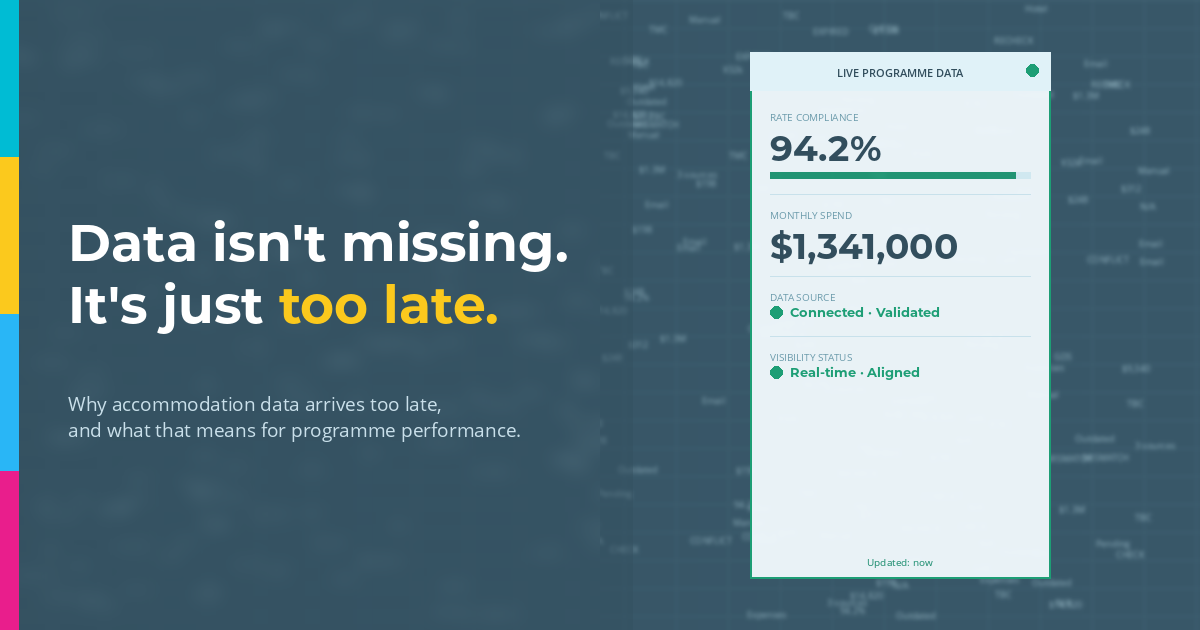
Reporting naturally looks backwards. By the time visibility arrives, the opportunity to influence the outcome has often passed.
We explored this challenge further in Why Does Accommodation Data So Often Arrive Too Late to Matter?, where delayed programme visibility creates increasing operational distance between decision-making and real programme conditions.
Once reporting fully reveals programme drift, the impact is usually already underway. Leakage increases. Confidence weakens. Programme performance begins moving away from expectation.
At that stage, organisations no longer manage the programme proactively.
They correct it retrospectively.
Why Is Rate Behaviour the Earliest Signal of Change?
Unlike retrospective reporting, rate behaviour exists in real time.
It reflects the programme exactly as it operates in that moment — not simply how teams designed it, and not only how reporting will later describe it.
That creates a significant opportunity.
Within rate behaviour, organisations can identify where alignment remains strong, where inconsistencies begin emerging, and where programme rules no longer translate effectively across systems and channels.
In many cases, these signals appear long before formal metrics begin shifting. Leakage has not yet become measurable. Supplier conversations have not yet turned reactive. Performance declines remain difficult to detect through traditional reporting structures.
As discussed in Why Corporate Accommodation Programmes Are Always Behind Reality, many programmes still rely on intelligence that has already become historically detached from live operating conditions.
Rate behaviour remains one of the few areas where current programme conditions become visible early enough to influence outcomes.
What Changes When We Shift How We Interpret Rates?
This shift is not about monitoring rates more aggressively to fix errors faster.
Instead, it focuses on understanding what rates already reveal about programme health.
The difference may seem subtle, but it changes the role visibility plays inside the programme.
The question moves from:
“Why is this rate wrong?”
To:
“What is this behaviour showing us about how the programme is operating?”
That change transforms rate inconsistency from operational noise into programme intelligence.
How Does This Move Programmes From Reaction to Awareness?
When organisations treat rate behaviour as a signal rather than an exception, visibility starts serving a different purpose.
Teams can identify misalignment earlier. They can understand how systems and channels interact in real time. They can recognise emerging patterns before measurable performance issues fully develop.
This reflects a broader shift already emerging across the industry — a movement away from static annual programme management and toward continuous programme awareness.
Importantly, that shift does not come from more reporting alone.
It comes from earlier visibility into how programmes actually behave.
What Does It Mean to See a Programme as It Actually Operates?
Corporate accommodation programmes are not fixed structures.
They are living operational environments shaped by constant movement across pricing, availability, distribution, and traveller demand.
Rate behaviour is one of the few areas where that movement becomes visible in real time.
Not perfectly. Not completely.
But often early enough to matter.
Why Do Most Programmes Drift Before They Fail?
Programmes rarely collapse suddenly.
Most drift gradually. Quietly. Almost invisibly.
Over time, the gap between programme expectation and operational reality grows too large to ignore.
The opportunity is not to eliminate movement from the system.
The opportunity is to recognise that movement earlier — while organisations still have time to respond with clarity, alignment, and confidence.
And often, the earliest place that movement becomes visible is in the way rates behave.