Back to list

Why Most Accommodation Programmes Are Well Understood — But Still Out of Control
Corporate accommodation programmes are not lacking visibility.
Most teams today have access to detailed reporting dashboards, regular performance reviews, supplier insights, and internal analysis. They can explain where spend went, where leakage occurred, and which properties performed as expected.
On paper, the programme is well understood.
And yet, despite this level of visibility, a familiar feeling persists: control still feels just out of reach.
Because understanding what happened is not the same as influencing what happens next.
Why Doesn’t More Visibility Lead to More Control?
Traditional programme management is built on oversight.
A structured cycle of review, analysis, and adjustment. One that brings clarity, creates accountability, and supports decision-making.
It is a model that has served the industry well.
But it also carries a fundamental limitation.
It is retrospective by design.
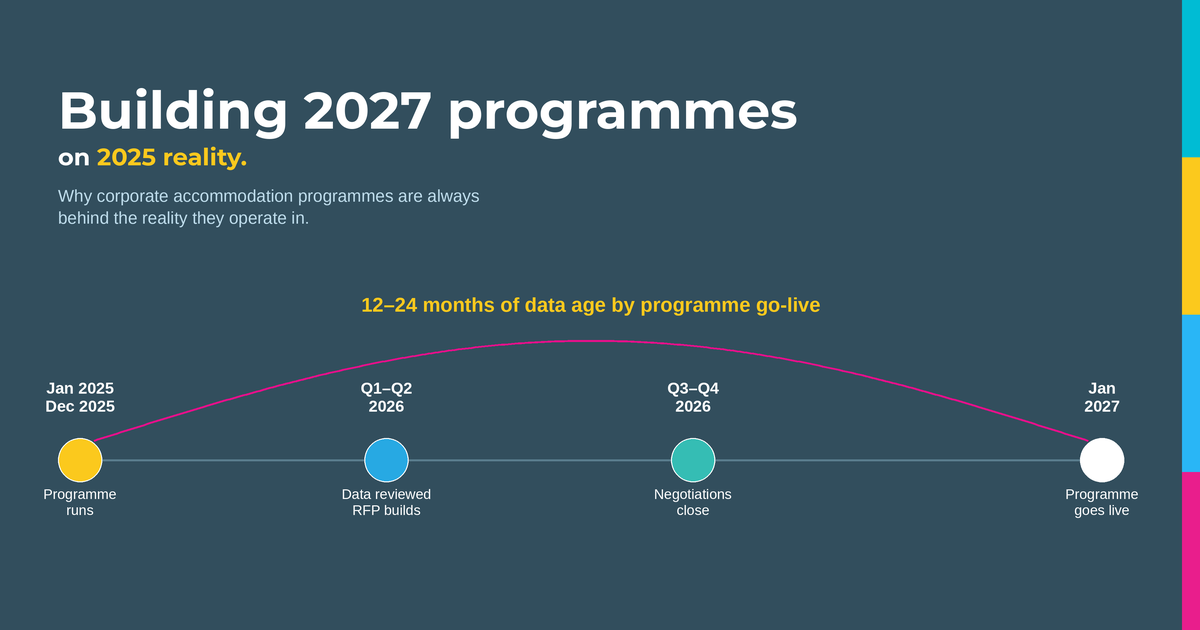
By the time insights appear, the programme has already moved. Rates have shifted. Availability has changed. Traveller behaviour has adapted. Performance has evolved.
At that point, action becomes corrective.
Not controlling.
Traditional oversight explains where the programme has been.
But continuous environments require something more responsive: the ability to influence direction while the programme is still moving.
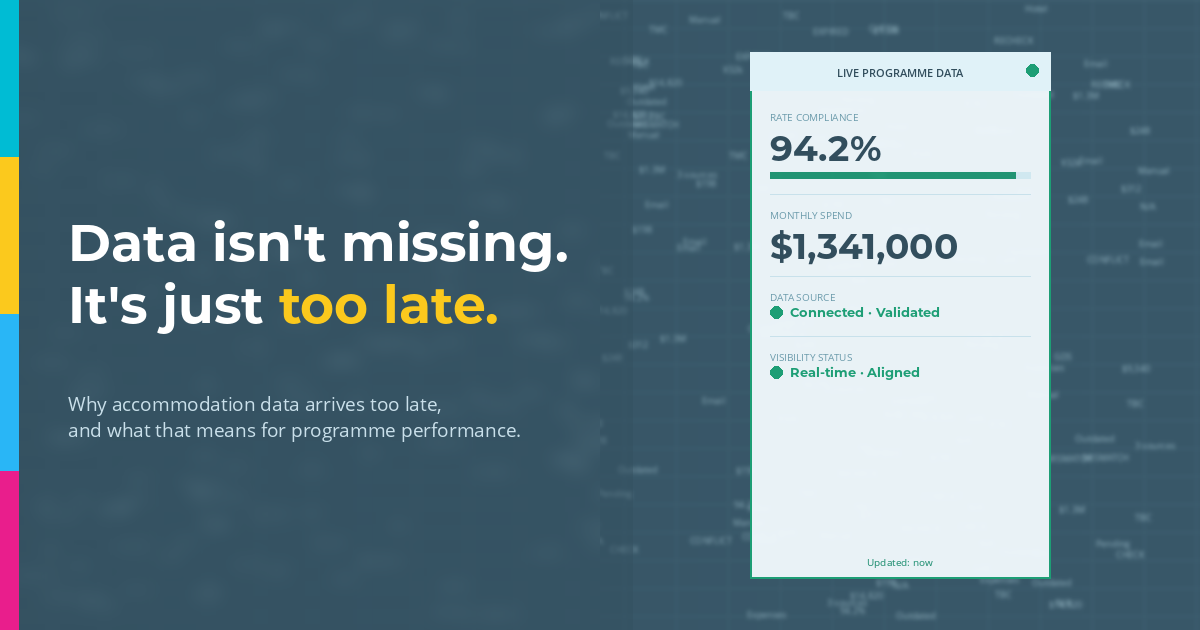
This timing challenge is something we explored further in our earlier article, “Why Does Accommodation Data So Often Arrive Too Late to Matter?”
What Happens When Programmes Move Faster Than Management Cycles?
The challenge is not with oversight itself.
It is with the assumption that programmes operate in cycles.
Because in reality, they do not.
As explored previously in “Corporate Accommodation Programmes Are Continuous — Not Cyclical,” accommodation programmes are continuously in motion. Rates adjust daily. Availability shifts in real time. Distribution changes dynamically. Demand patterns evolve constantly.
This creates a structural gap:
programmes move continuously
while management happens periodically
And within that gap, something we have already begun to recognise takes shape: drift.
Why Is Drift So Difficult to Act On?
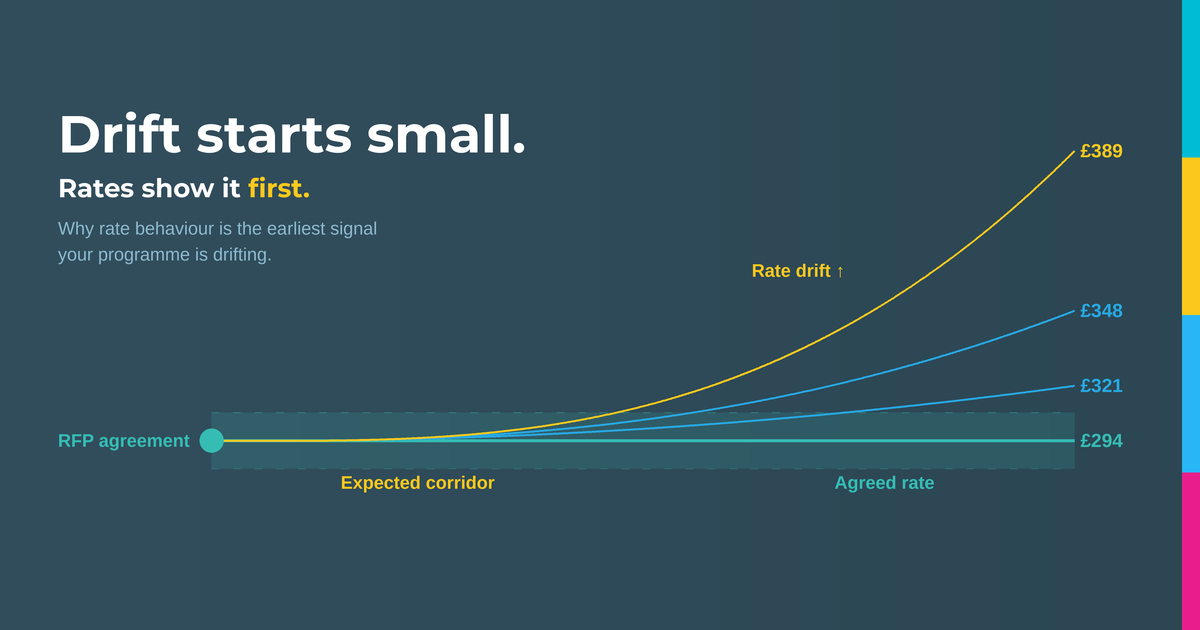
As explored in our earlier discussion, “Why Rate Behaviour Is the Earliest Signal Your Programme Is Drifting,” programmes rarely fail suddenly.
They drift.
Gradually. Quietly. Often without immediate visibility.
Early signals exist — particularly within rate behaviour — but they are rarely used at the moment they appear. In many cases, this is because visibility still arrives too late to influence accommodation sourcing decisions.
Because the dominant model of management waits.
It waits for reporting cycles. For consolidated insight. For validated data.
By the time that insight arrives, the programme has already moved further away from its intended state.
What If Control Isn’t About Oversight at All?
This is where a subtle but important shift begins to emerge.
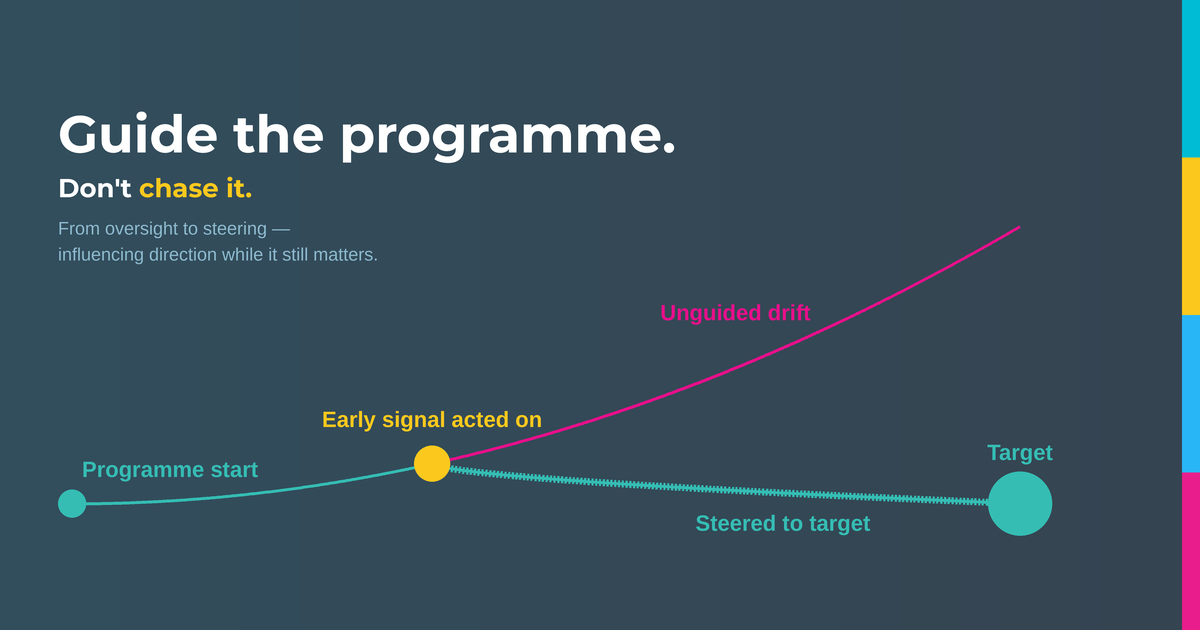
If oversight is about understanding the past, then control in a continuous environment must be about influencing the present.
This introduces a different way of thinking about programme management: programme steering.
What Does Programme Steering Actually Mean?
Programme steering is not a replacement for oversight.
It is an evolution of it.
Where oversight focuses on outcomes, steering focuses on direction.
It is the ability to recognise early signals as they emerge, and to influence accommodation sourcing decisions before programme drift becomes visible in reporting.
Not through large interventions.
But through continuous guidance.
The shift is subtle, but significant:
From reacting to outcomes
To influencing direction
Why Does Steering Happen Before Outcomes Exist?
One of the most important changes in perspective is recognising when control actually occurs.
It does not happen at the end of the programme, once results are clear.
It happens while the programme is still moving.
Before performance declines. Before leakage becomes visible. Before stakeholders begin to question outcomes.
Steering works through signals, not summaries.
Through behaviour, not reports.
It relies on recognising small changes — in rate patterns, availability shifts, channel inconsistencies — that, individually, may seem insignificant, but collectively indicate where the programme is heading.
And crucially, these signals appear early enough to act on.
What Makes Programme Steering Possible?
This shift is not purely conceptual.
It depends on structural capability.
For steering to exist in practice, three conditions need to be in place:
First, timely signals — not delayed reports, but indicators that reflect change as it happens.
Second, connected visibility — not fragmented programme data, but a coherent view across sourcing, booking, and distribution environments.
Third, the ability to act within the flow — not after-the-fact correction, but in-the-moment adjustment.
Without these, programmes naturally default back to oversight.
Which is why so much programme management today still relies on manual intervention, delayed insight, and reactive correction.
Not because teams lack capability — but because the system does not yet support continuous control.
How Should We Rethink Control in a Moving Environment?
Control has traditionally been associated with certainty.
Clear reports. Defined outcomes. Structured reviews.
But in a continuously moving environment, control begins to take on a different meaning.
It becomes the ability to respond to movement. To guide direction. To adjust early, rather than late.
Not perfect visibility — but timely awareness.
Not rigid control — but continuous influence.
What Changes When We Move From Observation to Guidance?
As programmes become more dynamic, the role of programme management evolves with them.
From observing performance
To guiding behaviour
From reviewing outcomes
To shaping direction
From explaining what happened
To influencing what happens next
This is the transition from oversight to steering.
And it marks a meaningful shift in how control is understood.
Why Do Most Programmes Still Feel Out of Control?
Most programmes do not lack insight.
They lack the ability to act at the moment that insight matters.
And in a system that is constantly moving, that moment arrives earlier than most structures are designed to support.
The opportunity is not simply to understand the programme more deeply.
It is to engage with it differently.
Not as something to review.
But as something to guide.