Back to list

Rate Integrity in Corporate Hotel Programmes: The Invisible Problem Undermining Programme Value
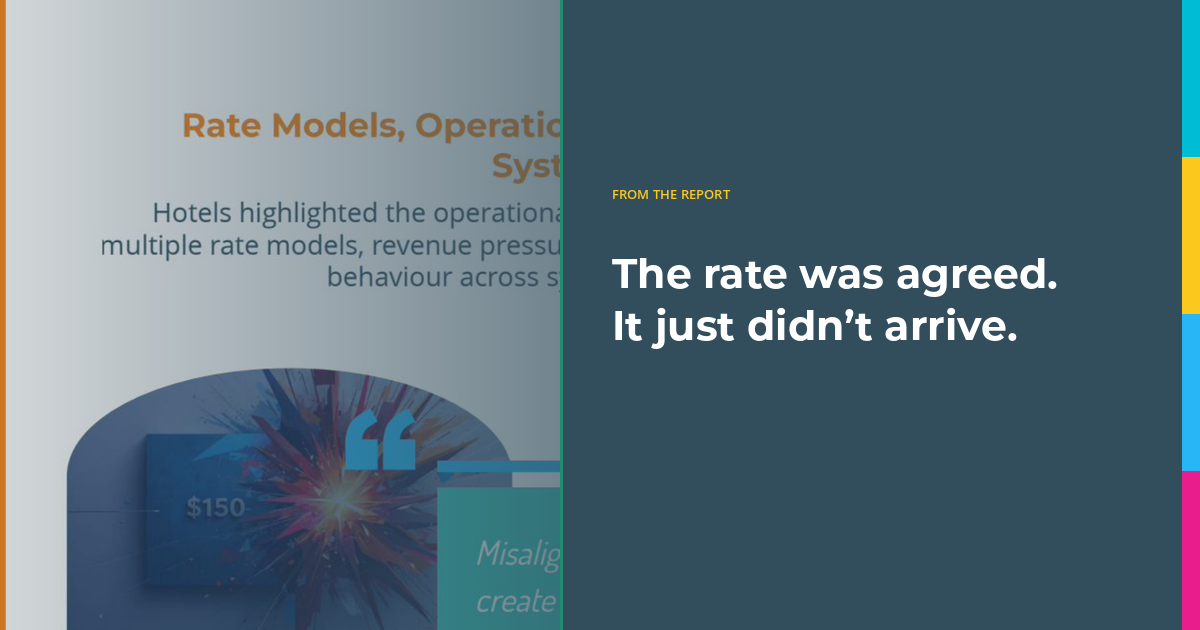
Negotiated hotel rates that fail to appear at point of booking. Rates that vary across platforms. Discrepancies that take weeks to trace. Rate integrity is one of the most persistent — and least visible — challenges in corporate accommodation. This article explains why.
What is rate integrity – and why does it matter?
Few issues in corporate accommodation generate more quiet frustration than rate behaviour that does not match expectation.
In corporate accommodation, rate integrity refers to the consistent loading, display, and availability of negotiated hotel rates across all booking and distribution channels throughout the agreement period.
A negotiated rate is agreed. The agreement is confirmed. Yet at the moment a traveller searches, the rate may be missing, misloaded, restricted by availability controls, or undercut by a public channel.
Rate integrity refers to whether agreed corporate hotel rates load correctly, display consistently, and behave as expected across all booking channels throughout the agreement period.
When rate integrity holds, negotiated value is visible and defensible.
When it fails, confidence begins to erode.
How do rate integrity failures present in practice?
Buyers consistently described a recurring pattern:
- Negotiated rates missing at the point of booking despite confirmed agreements
- Rates loading inconsistently across different booking platforms
- Public promotional or OTA rates appearing cheaper than corporate rates
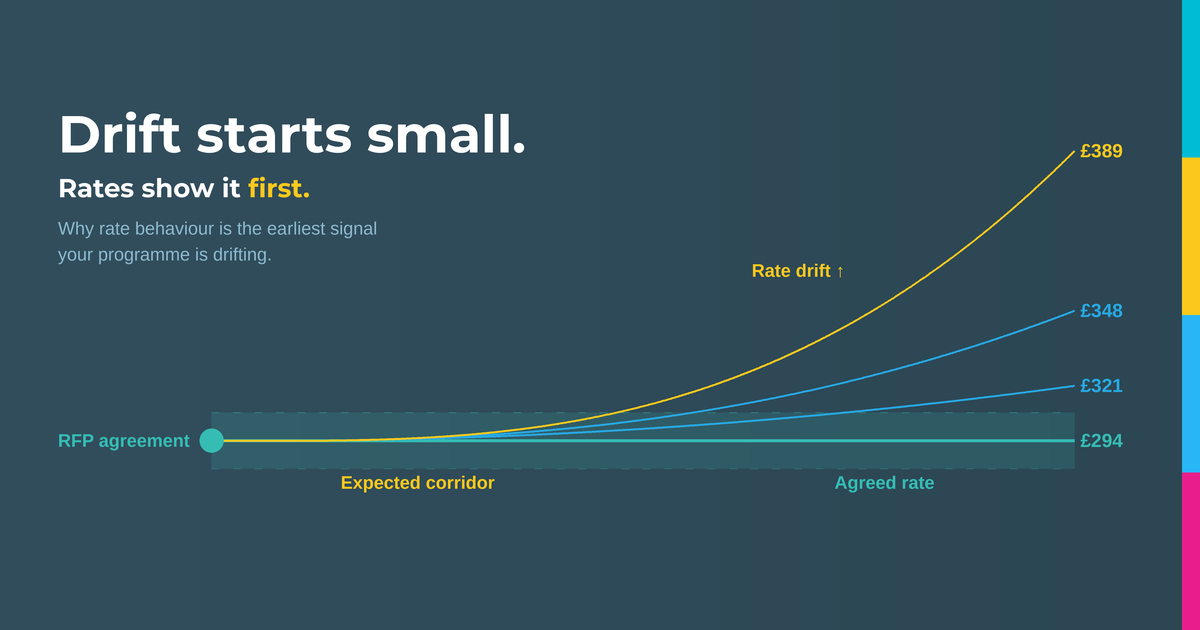
- Rate drift over the year as dynamic structures shift or availability controls change
- Difficulty identifying the root cause when multiple systems are involved
The immediate impact is operational – leakage increases, travellers book alternatives, internal questions surface.
The deeper impact is perceptual. If negotiated rates cannot be relied upon to behave predictably, the logic of the programme itself becomes harder to defend.
Why is rate integrity so difficult to maintain?
The structural reason is distribution complexity.
A negotiated rate does not move directly from contract to traveller. It travels.
From hotel revenue systems to central reservation systems.
From there to global distribution systems.
Then through TMC platforms and booking tools.
Sometimes through additional aggregation layers.
Each handoff introduces potential misalignment – differing definitions, update delays, availability controls, or formatting inconsistencies. These distribution layers often operate within fragmented data environments where no single source of truth exists – a structural constraint examined in our earlier analysis of the disconnected data problem in corporate accommodation.
The rate itself may be sound.
The infrastructure carrying it is where friction emerges.
This is not a negotiation failure. It is a systems alignment challenge.
What does rate integrity failure cost?
The visible cost is leakage and rate variance. As explored in our analysis of corporate hotel programme leakage as a design problem rather than a compliance issue, negotiated value cannot influence behaviour if it fails to appear reliably at the moment of booking.
When negotiated rates fail to appear or behave consistently, travellers choose alternatives – sometimes at higher cost, sometimes simply outside programme visibility.
The less visible cost is trust.
When a traveller finds a lower public rate for the same hotel covered by a corporate agreement, the internal question shifts quickly:
What exactly is the negotiated value delivering?
That question does not always surface immediately. It accumulates over time – in finance reviews, procurement discussions, and programme performance meetings.
Confidence becomes conditional rather than assumed.
Why does this issue persist?
Rate integrity challenges persist because they sit in the operational layer of distribution – not the strategic layer of sourcing.
They are rarely dramatic enough to trigger structural redesign. Instead, they generate investigation, reconciliation, and short-term fixes.
Manual audits are conducted. Emails are exchanged. Explanations are offered.
But the underlying distribution pathway remains unchanged.
As long as negotiated rates must travel through multiple independent systems before reaching the booking interface, integrity will depend on coordination rather than certainty.
Conclusion
Rate integrity is not a visible headline issue. It does not dominate conference panels or procurement summaries.
Yet it sits beneath many of the industry’s recurring tensions – leakage, internal scrutiny, year-end surprises, and defensibility of value.
Both buyers and hotels consistently signalled in 2025 that they want the same outcome: rates that behave as agreed.
Achieving that outcome requires attention not only to negotiation, but to the infrastructure that carries negotiated value into the booking environment.
The State of Corporate Accommodation identifies rate integrity as a structural priority moving into 2026 – not because it is new, but because its cumulative impact on confidence is becoming harder to ignore.