Back to list

Decision-Time Visibility: Why Reporting Alone Cannot Restore Confidence in Corporate Accommodation
Corporate travel programmes now generate more reporting than ever — yet buyer confidence remains conditional. This article closes the loop on the reporting gap and explains why visibility must align with the decision window, not the audit cycle.
Why Hasn’t More Reporting Restored Confidence?
Earlier in this series, we explored a recurring tension in our earlier analysis of why increased reporting has not improved confidence in corporate accommodation programmes: reporting across corporate accommodation programmes has increased in frequency and sophistication, yet buyer confidence has not risen proportionally
Dashboards continue to expand. Quarterly reviews provide deeper insights. Year-end analysis delivers greater detail.
Despite this progress, many buyers still operate defensively. They qualify figures, reconcile discrepancies, and validate performance before taking action. This defensive posture mirrors the credibility strain described in our discussion of corporate travel buyers operating under increasing internal pressure.
The issue is not effort. It is timing.
What Reporting Is Designed to Do
Reporting serves a clear and valuable purpose within corporate travel programmes.
It consolidates completed activity.
It explains what happened.
It supports audit processes, benchmarking, and retrospective evaluation.
Ultimately, reporting summarises past performance.
This design works as intended. However, it remains inherently time-bound.
Where the Timing Gap Becomes Structural
Commercial decisions in corporate accommodation do not happen quarterly or annually — they happen continuously.
Rates load and fail in real time.
Availability controls tighten mid-week.
Booking cycles reveal leakage patterns.
Market conditions shift without warning.
When visibility arrives after the reporting cycle closes, it only explains outcomes that have already taken place.
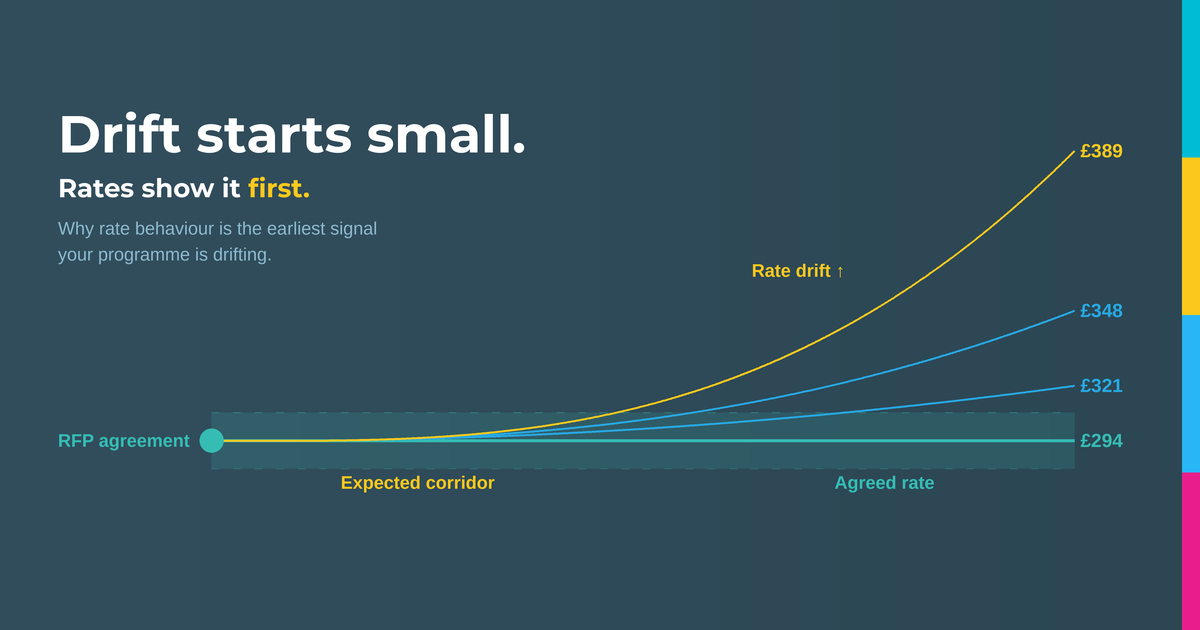
For instance, a quarterly review may highlight rate drift. By that point, however, pricing behaviour has already influenced booking decisions for weeks.
The system does not fail — it performs exactly as designed.
However, the design assumes that retrospective insight enables proactive control.
That assumption no longer holds.
What Is Decision-Time Visibility?
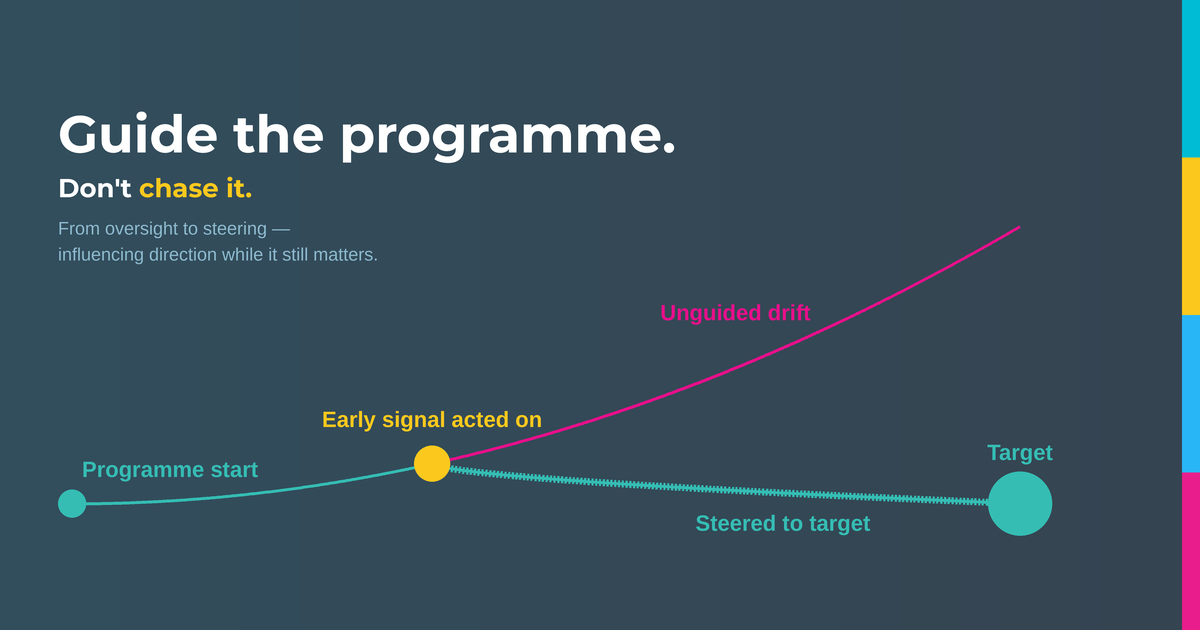
Decision-time visibility does not mean increasing reporting frequency. Instead, it delivers insight during the active commercial window — when rates load, bookings occur, and teams can still influence behaviour.
This approach goes beyond building larger dashboards.
It aligns visibility with the exact moment commercial behaviour takes shape.
In practice, this means:
-
Identifying rate loading inconsistencies as they occur
-
Observing leakage patterns during live booking windows
-
Detecting performance shifts within the active commercial period
-
Understanding negotiated value behaviour before credibility comes into question
The distinction is subtle but critical.
Reporting explains what happened.
Decision-time visibility enables you to influence what is happening.
Why This Is an Architectural Issue — Not an Ambition Gap
Buyers already have the capability to manage programmes proactively.
The real constraint lies in how signals move through the system.
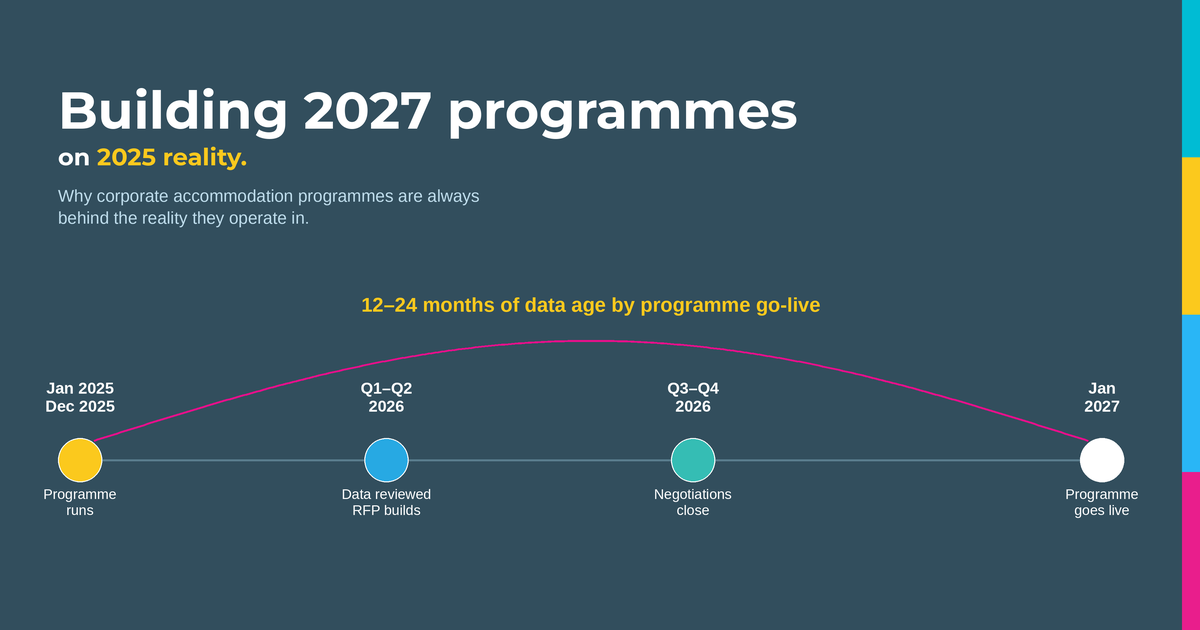
Most corporate accommodation ecosystems were built to reconcile distributed data, not to maintain continuous alignment. As a result, data moves in batches, reviews follow fixed schedules, and teams act only after issues are detected.
In stable markets, this model worked.
In dynamic markets, it creates hesitation instead of confidence.
Markets now move continuously — and visibility must move with them.
Conclusion: From Reporting More to Seeing Sooner
More reporting alone will not restore confidence.
Confidence improves when visibility aligns with the decision window.
The timing gap identified earlier in this series does not reflect a lack of reporting — it reveals a structural misalignment between how programmes are reviewed and how markets actually behave.
As buyers and hotels prepare for 2026 planning cycles, the key question becomes clearer:
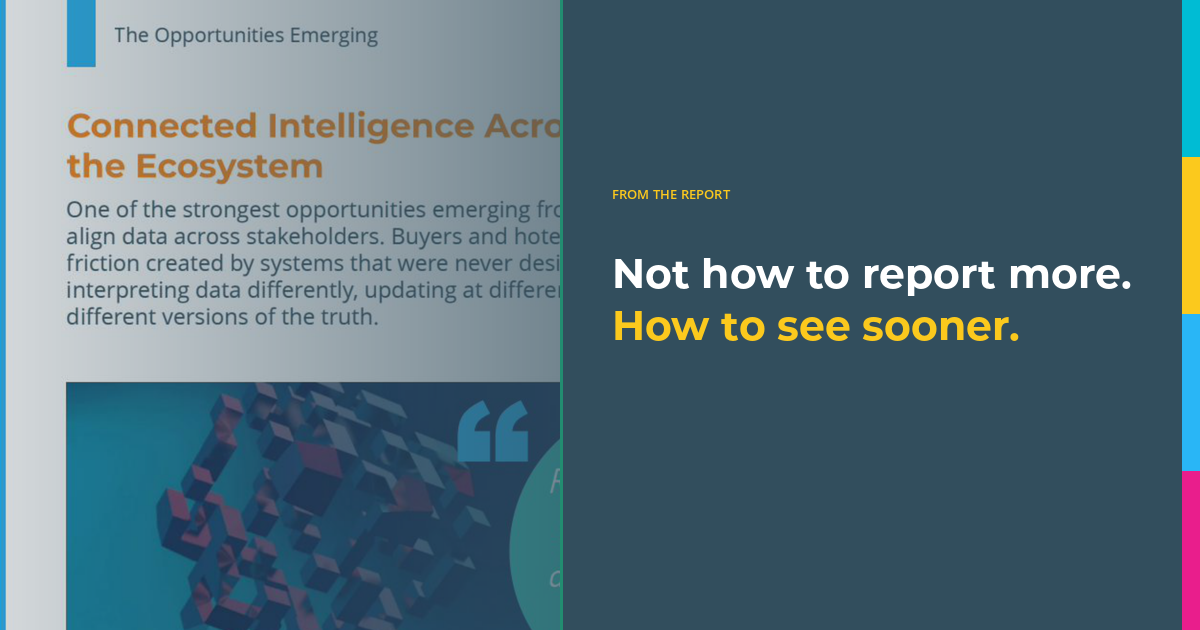
Not how to report more.
But how to see sooner.
The State of Corporate Accommodation highlights this shift, signalling that the industry increasingly views visibility as an architectural requirement — not just a reporting output.