Back to list

Corporate Travel Buyers Under Pressure: Why Proactive Programme Management Remains Out of Reach
Corporate travel buyers face growing expectations to deliver continuous insight – yet most still rely on tools built for annual reconciliation. This disconnect explains why reactive programme management persists. The issue is not intent, but infrastructure.
What Are Corporate Travel Buyers Expected to Deliver?
Corporate travel buyers now operate under a widening expectation gap.
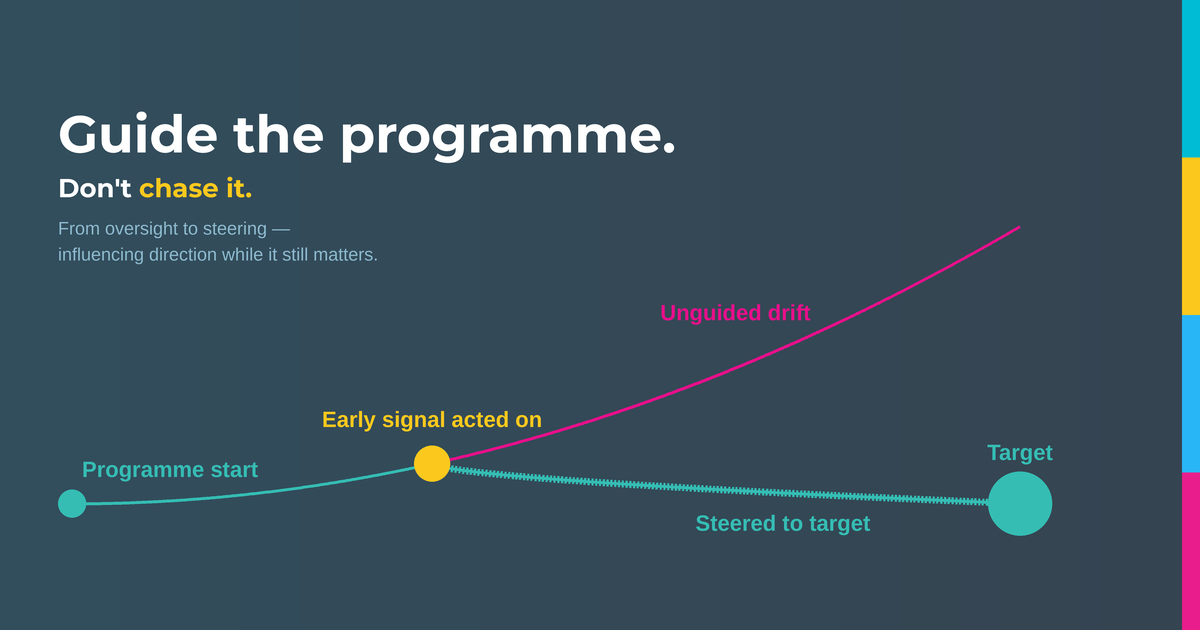
In corporate accommodation, reactive management means resolving rate discrepancies, leakage, or performance issues after commercial impact occurs – instead of steering outcomes in real time.
Programmes continue to expand across markets and property types. At the same time:
-
Internal stakeholders expect monthly or quarterly performance insights, not annual summaries
-
Finance teams demand confidence in savings delivery
-
Procurement teams expect negotiated value to hold under changing market conditions
This pressure rarely feels urgent – but it is constant. Stakeholders assume certainty, even when underlying data systems cannot reliably produce it.
Why Does Reactive Management Persist in Corporate Accommodation?
Corporate travel buyers do not choose reactive management – they work around structural limitations.
Many buyers operate within systems where critical data:
-
Arrives late
-
Appears fragmented
-
Requires manual reconstruction before it becomes usable
This fragmentation reflects the broader structural constraint examined in our earlier analysis of the disconnected data problem in corporate accommodation, where no single source of truth exists across programme systems.
When a rate discrepancy appears, buyers often investigate across:
-
Hotel systems
-
TMC reports
-
Card data
-
Expense platforms
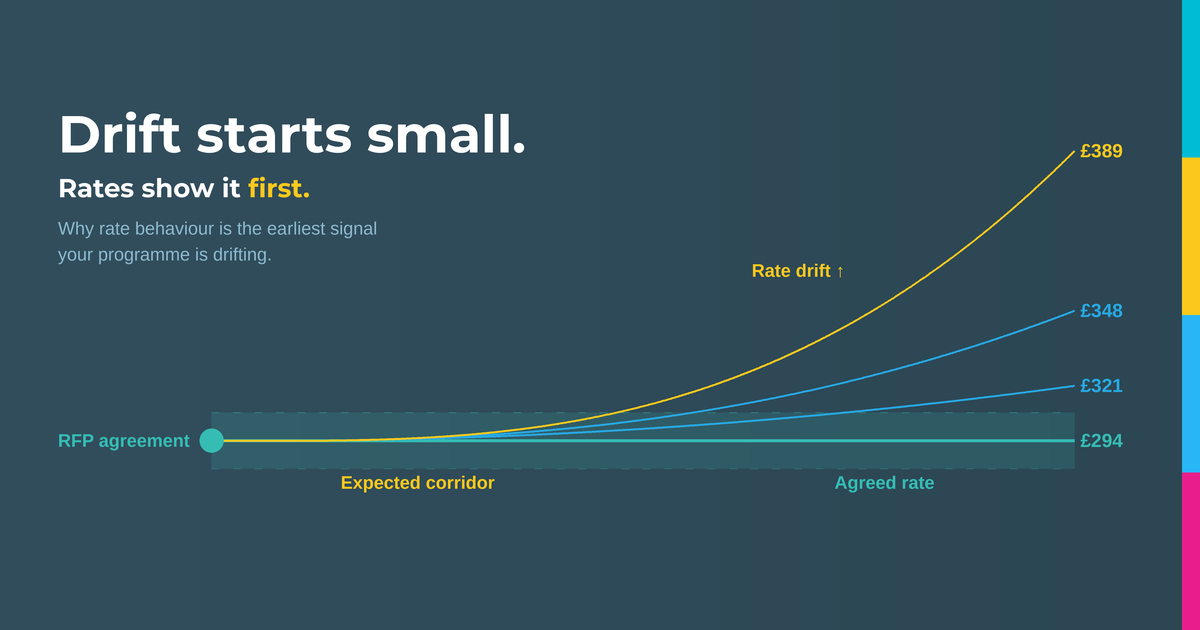
Each reflecting slightly different figures. As examined in our analysis of rate integrity in corporate hotel programmes, these discrepancies often originate in distribution pathways rather than negotiation failures.
By the time buyers identify the root cause, the issue has often persisted for weeks.
Reactive programme management continues because existing infrastructure supports retrospective reconciliation—not real-time oversight.
How Does Reactive Management Impact Internal Credibility?
The impact on internal credibility is subtle but significant.
It rarely shows up as direct conflict. Instead, it appears as hesitation and qualification.
For example:
A stakeholder asks for current hotel spend performance and a projected year-end position. The buyer knows the answer exists—but not as a single, defensible figure.
The buyer follows up later with revised numbers after completing reconciliation.
Nothing breaks – but confidence shifts.
Stakeholders begin to rely on verification instead of trusting the programme by default. Over time, this erodes perceived control and reliability.
What Prevents Proactive Programme Management?
Corporate travel buyers consistently describe the same pattern:
-
Teams identify rate drift during quarterly reviews, not when it begins
-
Analysts reconstruct leakage after trips, instead of flagging it at booking
-
Teams assemble performance reports manually, rather than accessing continuous data
The issue is not effort – it is system design.
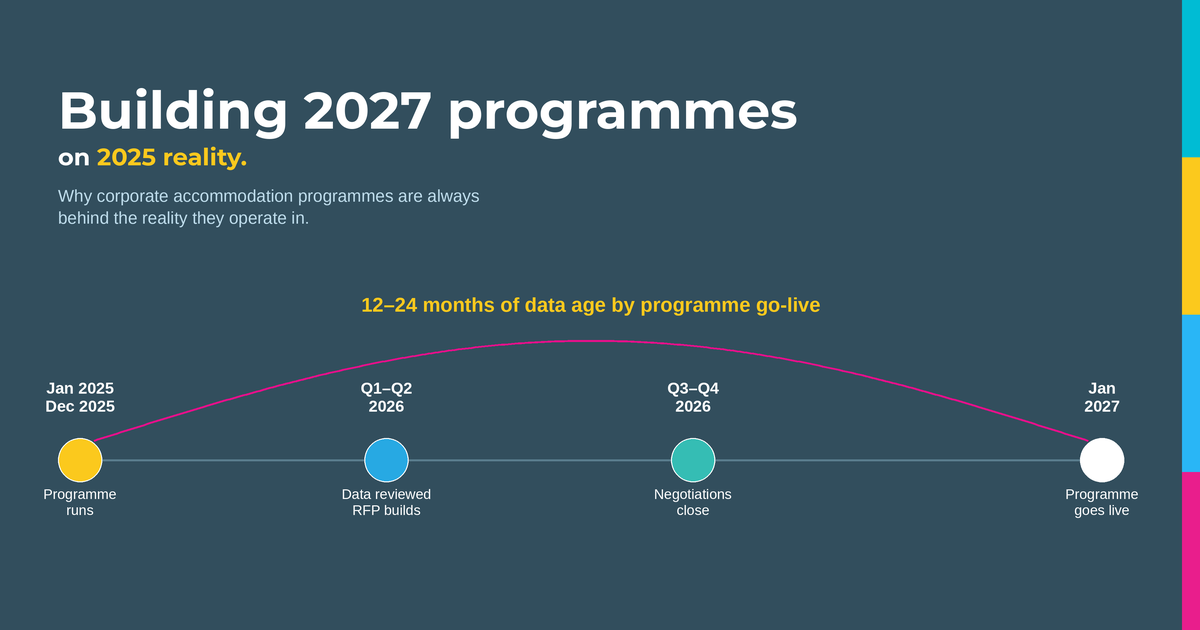
Proactive programme management requires decision-time visibility, not delayed reporting. Retrospective data cannot support real-time decisions.
Most buyers have the capability to manage proactively. However, current infrastructure makes consistent execution unsustainable.
The Role of Data Infrastructure in Travel Programme Performance
Data infrastructure, not strategy, defines programme effectiveness.
Without connected, real-time visibility:
-
Buyers cannot act within the decision window
-
Issues remain hidden until after financial impact
-
Confidence depends on reconciliation instead of clarity
Proactive management requires visibility that arrives within the decision window, not after it. As previously explored in our analysis of why increased reporting has not improved confidence in corporate accommodation programmes, retrospective visibility cannot substitute for decision-time insight.
Most buyers are capable of managing programmes proactively. The infrastructure available to them makes doing so consistently unsustainable.
Conclusion: Reactive Management Is a Structural Outcome
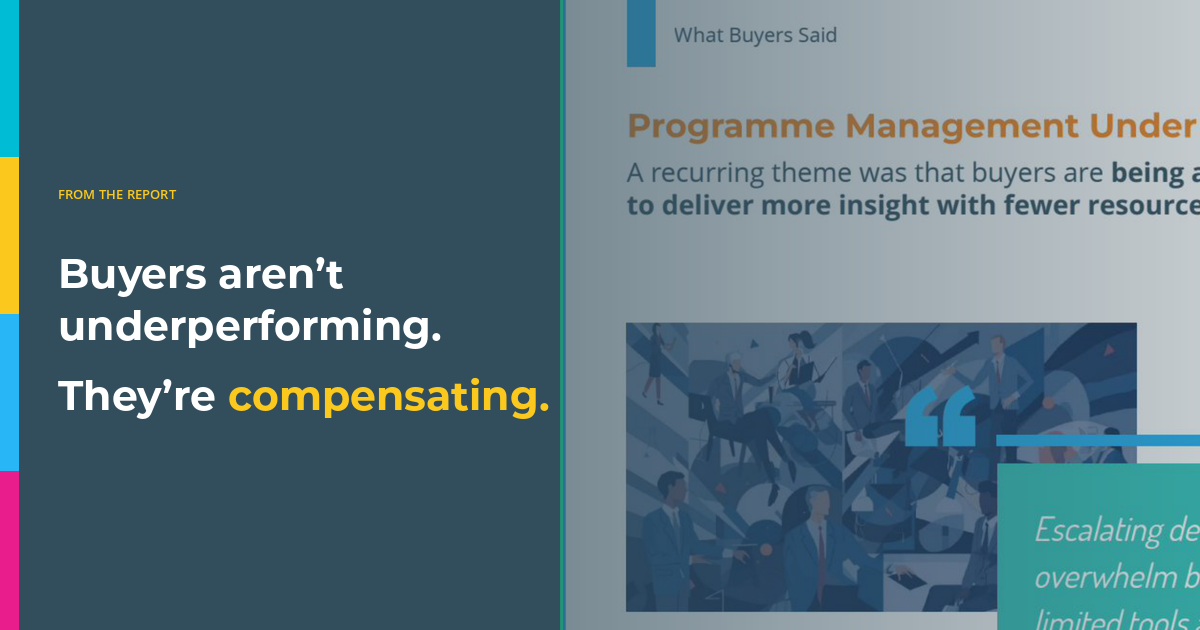
Corporate travel buyers are not underperforming – they are compensating.
They fill systemic gaps with manual analysis, reconciliation, and defensive preparation. While this effort keeps programmes running, it does not restore clarity or confidence.
True internal credibility depends on the ability to deliver clear, real-time answers without reconstruction.
Until data infrastructure evolves, reactive programme management will remain the default – not by choice, but by design.