Back to list

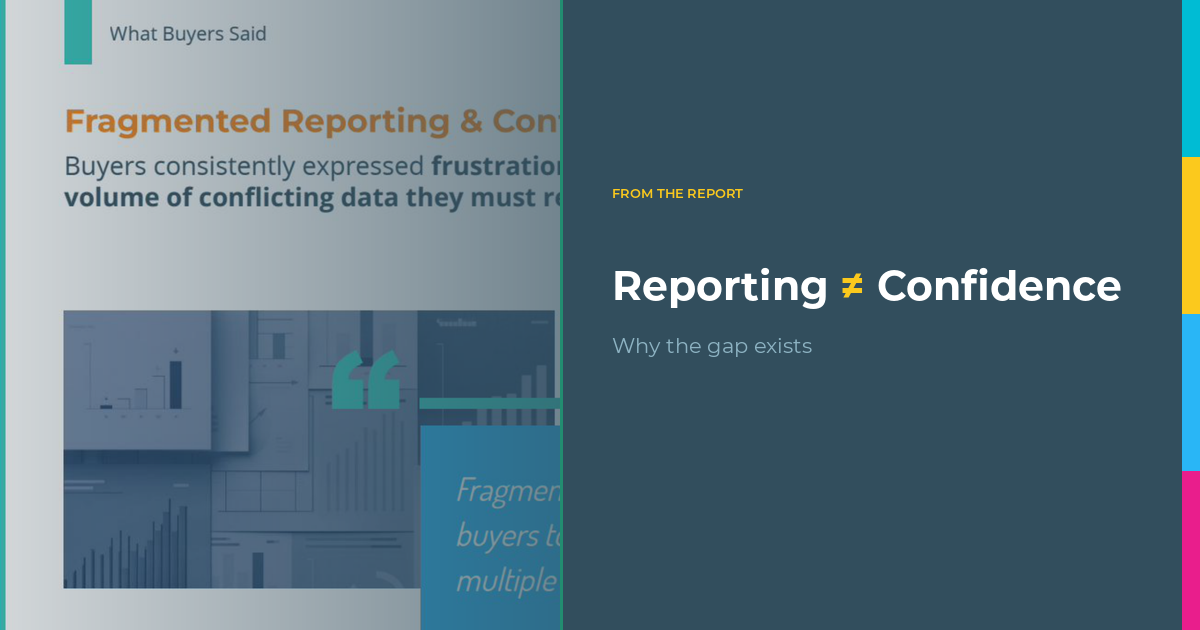
Why Increased Reporting Has Not Improved Confidence in Corporate Accommodation Programmes
Corporate accommodation programmes now produce more data than ever. Yet buyer confidence has not kept pace. This article examines the structural timing gap that separates visibility from certainty – and what the industry’s own voices said about it in 2025.
Is reporting intended to improve programme control?
In corporate accommodation, reporting is positioned as a primary mechanism for control. If performance can be measured, it can be managed. If exceptions can be flagged, they can be corrected. This logic holds in principle. However, buyer commentary in The State of Corporate Accommodation consistently distinguished between visibility and confidence. Visibility explains what has occurred. Confidence depends on understanding why it occurred and whether it will occur again. Most reporting frameworks are strong in retrospective explanation. They are weaker in delivering foresight at the point of decision.
Why does insight often arrive after commercial impact?
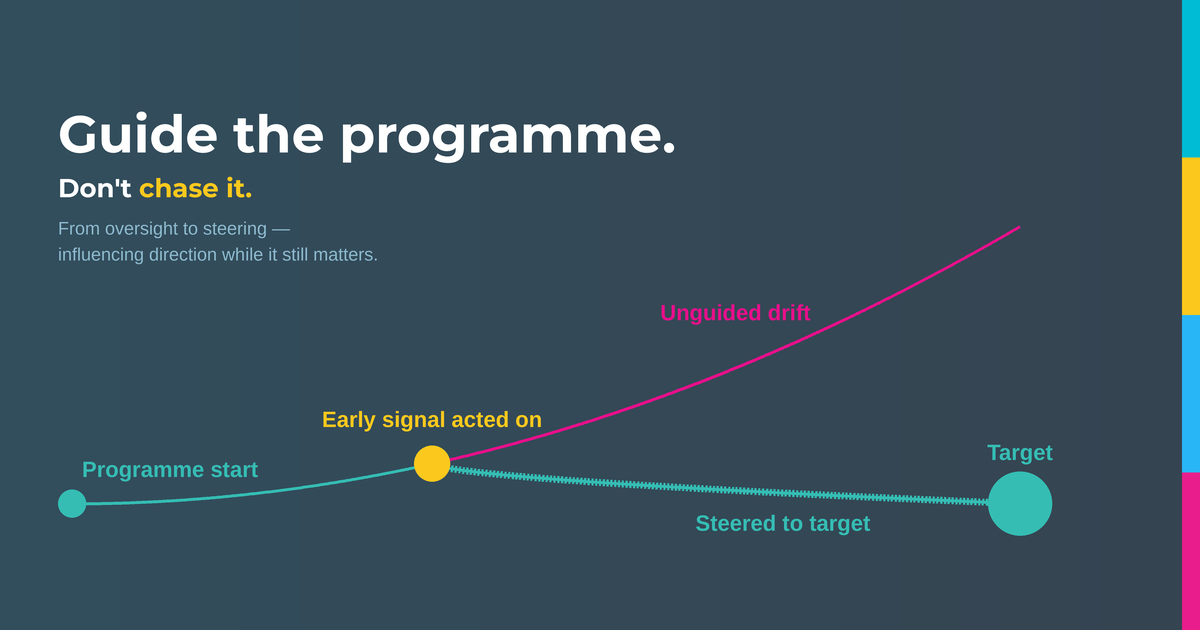
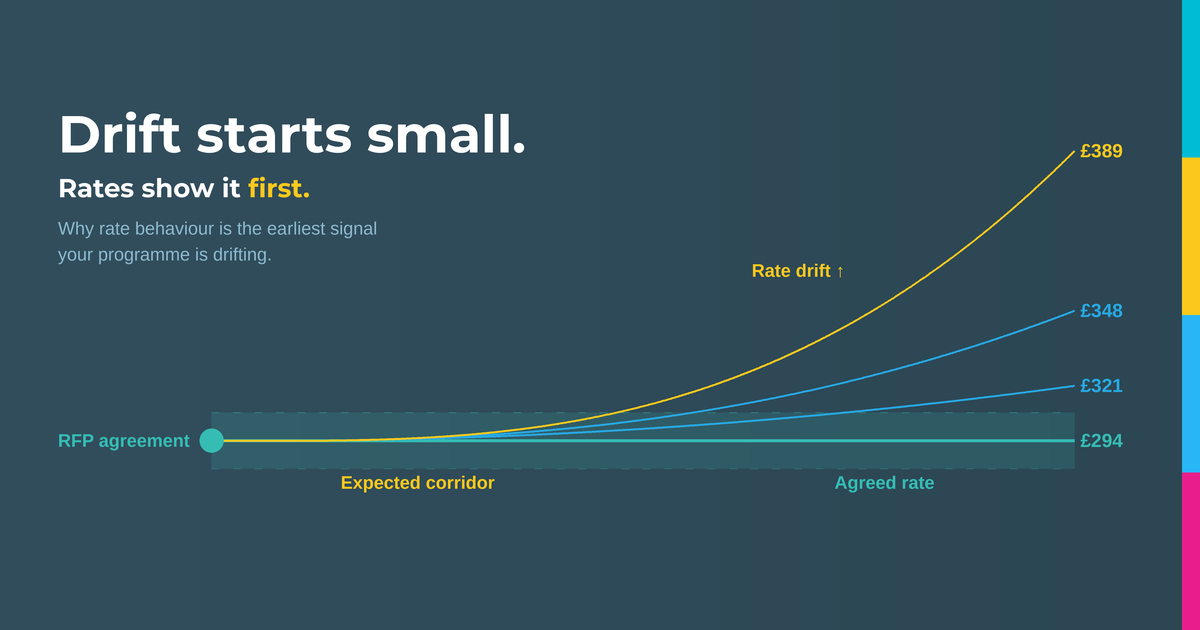
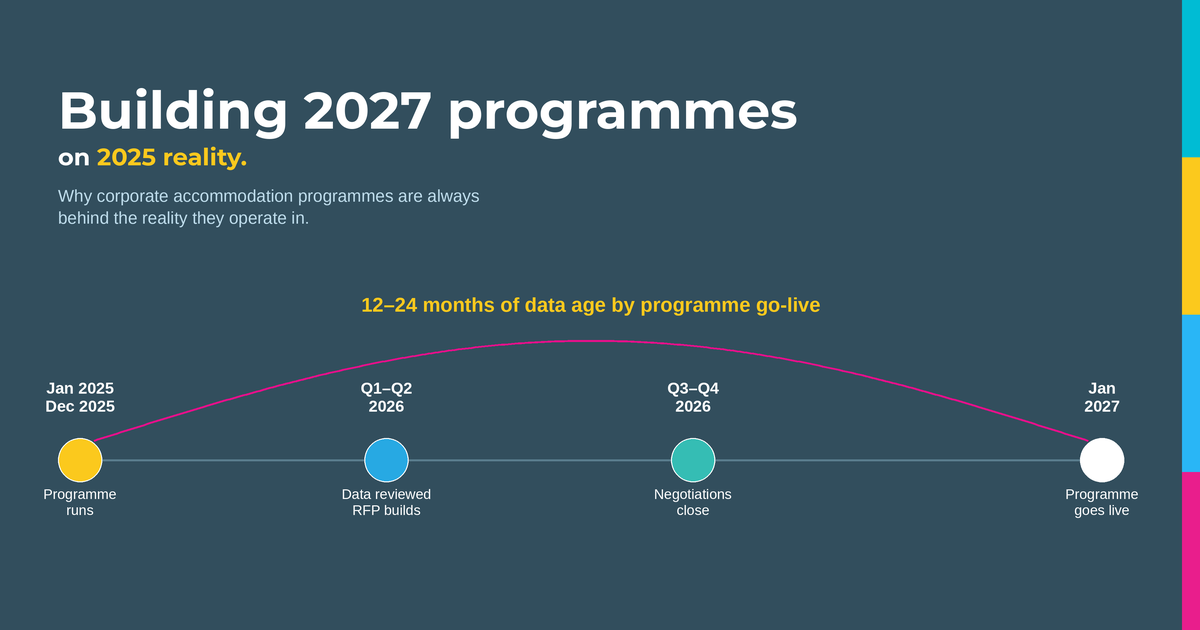
Timing emerged as a recurring structural constraint across both buyer and hotel perspectives. Performance insight frequently surfaces after bookings have been made, after rate patterns have stabilised, and after budget impact has already been realised. By the time reporting is reviewed, commercial consequences are embedded. In this environment, reporting becomes retrospective rather than directive. Confidence erodes not because data is missing, but because insight arrives after the window for influence has passed.
Does increased activity compensate for structural lag?
When certainty declines, a common response is to increase oversight – more reporting cycles, additional manual reconciliation, more checks. Buyer commentary in the report suggests this response is understandable but rarely stabilising. Activity creates the appearance of control. Structural alignment creates genuine confidence. These are not equivalent. The distinction matters because one is scalable and the other is not.
What structural pattern emerged from the report?
The State of Corporate Accommodation consistently surfaced one finding: confidence is not determined by how much information is available. It is shaped by how effectively insight travels through the system – and when it arrives relative to the decision it is meant to inform. Where reporting remains structurally separated from negotiation, booking behaviour, and commercial steering, it struggles to influence outcomes in real time. The timing gap is not a technology problem. It is a design problem.
Conclusion
The issue is not the presence of reporting, but its position within the operating model. Reporting remains essential for governance and accountability. However, when it becomes the primary mechanism for programme control, its structural timing limitations become visible – and confidence suffers. Understanding that distinction is the first step towards addressing it. The full picture is in The State of Corporate Accommodation, available here.