Back to list

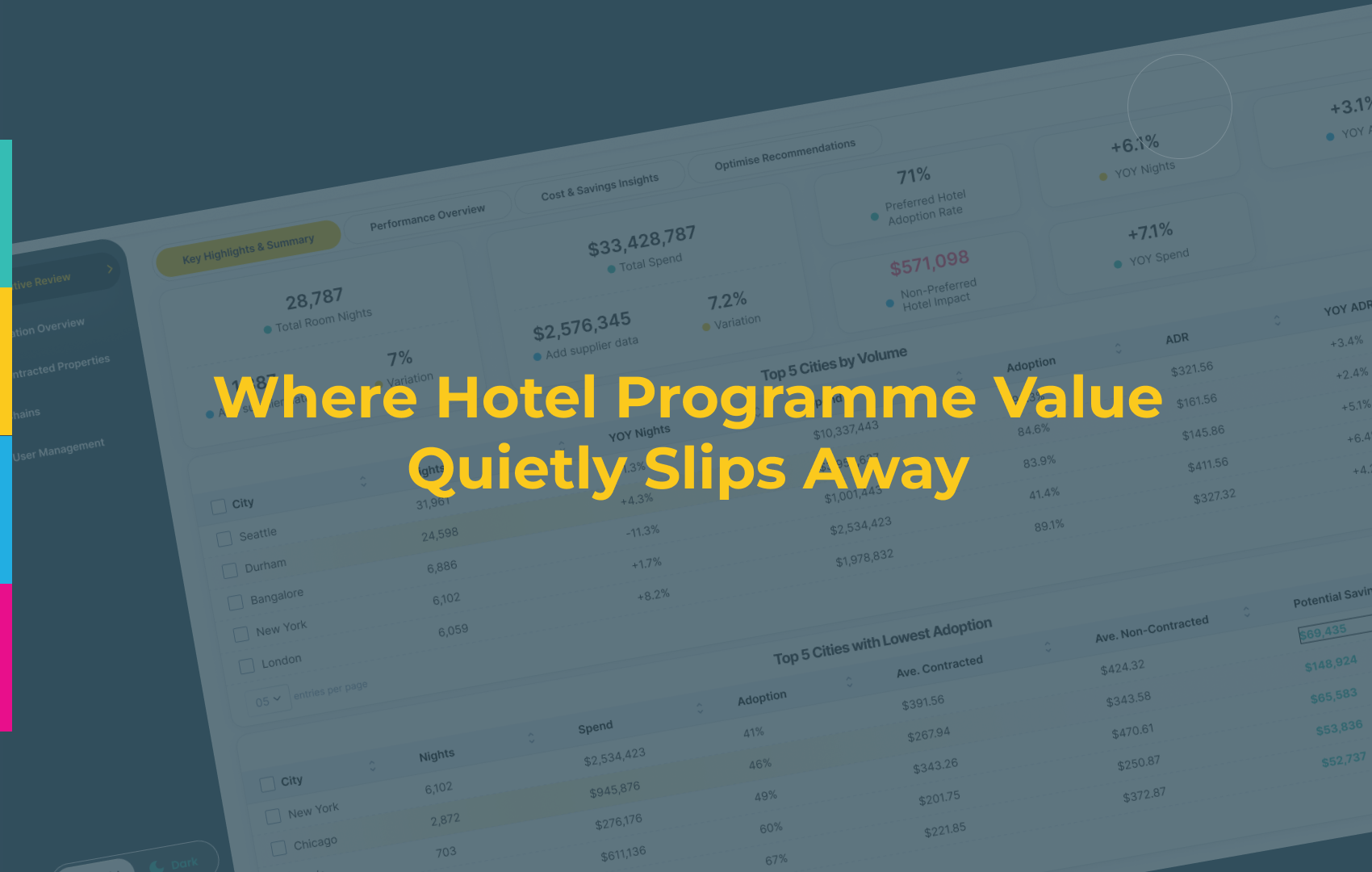
Preferred Rates, Hidden Costs: Where Value Slips in a Hybrid Hotel Programme
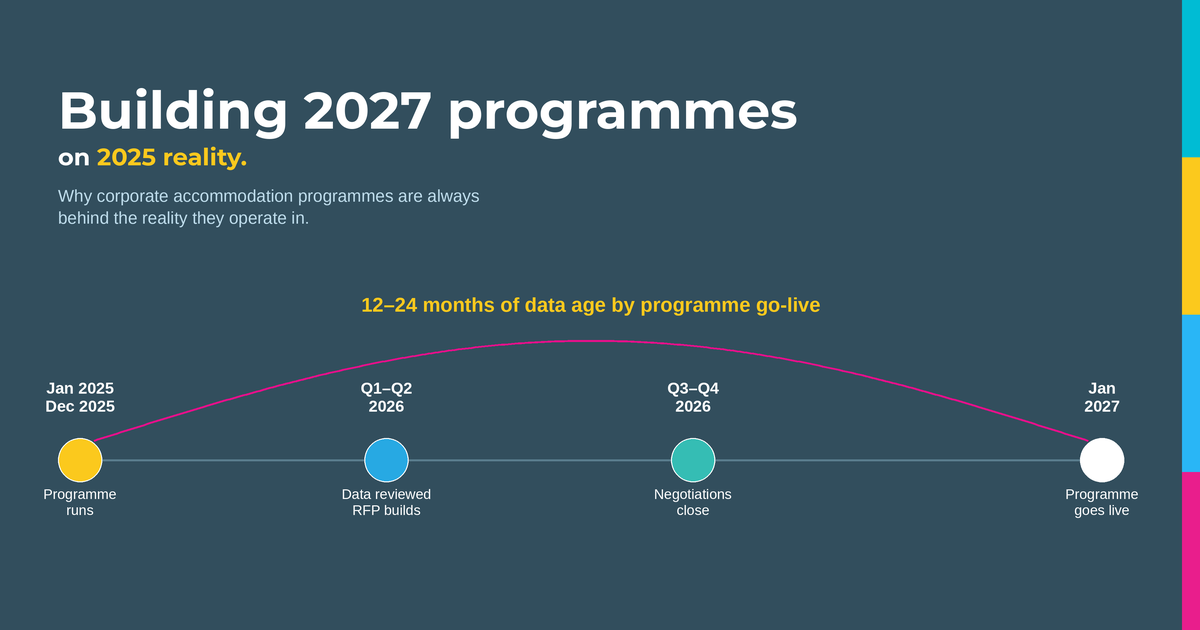
Hotel programmes take months to build. Data is reviewed, suppliers are evaluated, rate models are compared, and a careful balance of fixed rates, BAR discounts, caps and chain deals is assembled.
However, once the programme goes live, something subtle happens – something predictable, yet still frustrating. The value you expected on paper doesn’t always become the value you see in the real world.
This isn’t because buyers aren’t negotiating well.
It’s not because suppliers aren’t honouring their commitments.
It’s not even because travellers are “doing the wrong thing.”
Instead, the truth is simpler and more structural: today’s programmes are hybrid, dynamic and fast-moving, but visibility still arrives in slow, disconnected snapshots. That disconnect is exactly where value quietly slips away.
Hybrid Is Now the Norm – But Complexity Comes With It
A few years ago, hotel programmes were mostly fixed-rate driven. Today, however, most look more like this:
-
A few fixed rates in key markets
-
A mix of discounts off BAR
-
Chainwide dynamic agreements
-
Rate caps for high-demand locations
-
Preferred properties blended with market flexibility
This hybrid approach works – when everything aligns. Buyers gain flexibility, suppliers gain yield control, and travellers enjoy meaningful choice.
However, hybrid programmes rarely fail because the rate model is wrong. They fail because the programme changes faster than the visibility does.
The Moment Value Begins to Drift
Many buyers launch their programmes in January. Initially, expectations are clear, rate models make sense and supplier alignment looks strong.
Then real-world behaviour takes over:
-
A fixed rate becomes unavailable during peak nights
-
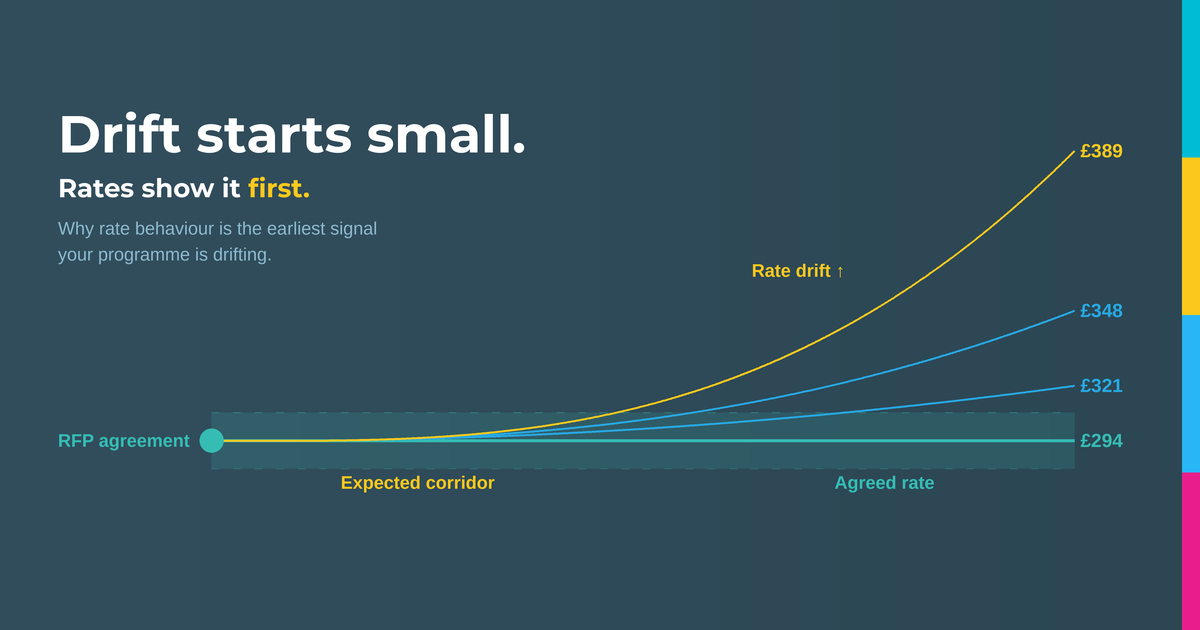
A discount-off-BAR yields higher than expected
-
A competitor opens with temporary pricing
-
A traveller chooses a nearby hotel based on reviews
-
A rate cap is exceeded during seasonal demand
-
The mix of hotels used begins shifting
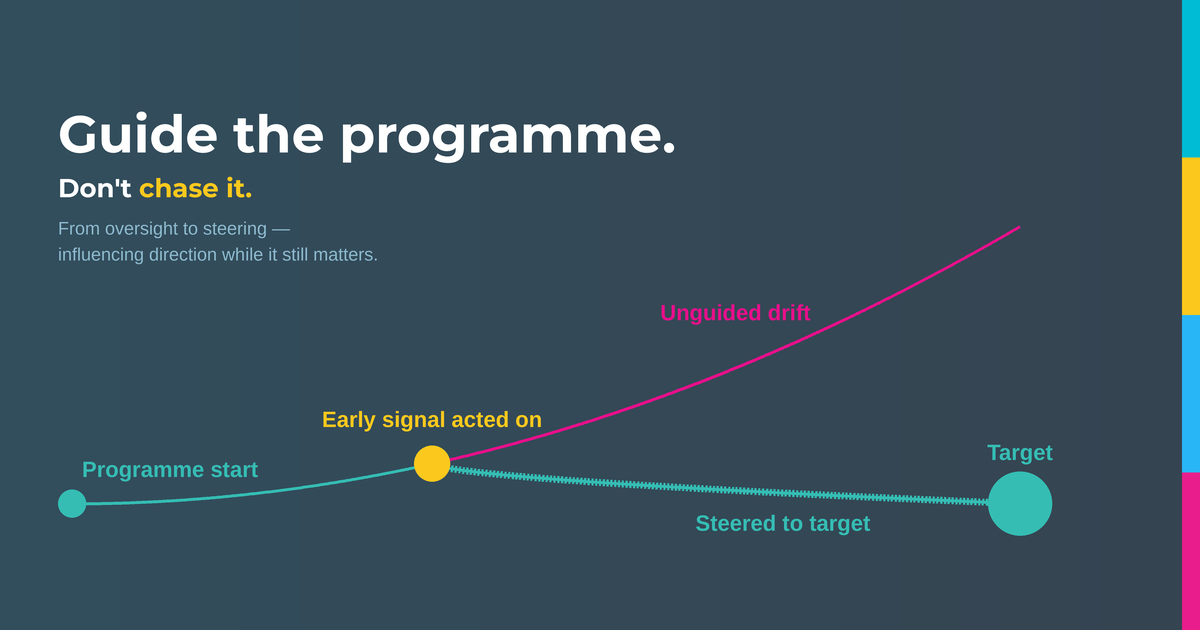
None of these moments feel dramatic. However, together they quietly reshape the programme long before the first quarterly review – especially if the RFP relied on data that is now 12 months old.
Hero Guide:
Where Value Slips in Hybrid Hotel Programmes
A clearer look at how modern programmes lose value – and how to protect it
Hotel programmes today rely on a blended structure: fixed negotiated rates, BAR discounts, rate caps, chainwide dynamic deals and shifting hybrid combinations.
This flexibility is useful. Nevertheless, it introduces quiet complexities that gradually distort programme value. Here’s where it typically begins:
1. Small Setup Variances Become Big Outcome Variances
Hybrid models rely on accuracy, and even tiny inconsistencies create noise. For example:
-
A discount applied incorrectly
-
A rate cap breached on high-demand nights
-
Fixed rates becoming unavailable as occupancy spikes
Individually, these issues seem minor. Yet collectively, they distort value long before anyone sees it.
2. Dynamic Rates Drift Faster Than Expected
In a dynamic environment, BAR moves:
-
daily
-
hourly
-
by room type
-
by channel
Even if discounts are loaded correctly, the base rate shifts constantly. Unfortunately, many teams only see the true impact when it’s already too late – and sometimes only after the entire programme year ends.
3. Traveller Choices Amplify or Correct Drift
Traveller behaviour isn’t the enemy, it’s a signal. People choose hotels based on:
-
reviews
-
commute time
-
loyalty
-
familiarity
-
safety
-
micro-preferences
These patterns accumulate. Consequently, they often move ahead of the programme’s original design and create a meaningful shift in hotel mix.
4. The Biggest Problem Isn’t the Rates – It’s the Visibility Gaps
Hybrid programmes create hybrid visibility challenges. Sourcing data, booking data, payment data, market data and actual performance rarely align. As a result, buyers receive fragmented slices of the truth.
By the time those pieces finally come together, the drift is already embedded.
Where OptimiseIQ Can Help
In a dynamic, hybrid world, value doesn’t disappear because hotels break agreements or because travellers deviate. Instead, it disappears because nobody sees the movement early enough.
OptimiseIQ helps by enabling:
-
a clean, consolidated view of nights and spend
-
performance comparisons within each market
-
early identification of cost drift
-
visibility into which hotels are driving variance
-
clarity around traveller patterns
-
insight into whether early behaviour aligns with programme intentions
This isn’t automated rate auditing or endless availability checks. Rather, it’s early intelligence—the kind that lets buyers understand change as it begins, not after it’s too late.
OptimiseIQ doesn’t simply confirm whether a rate was “correct.”
It reveals whether the programme is behaving as expected.
And that is what shapes the first 90 days—and ultimately, the entire year.
Why the First 90 Days Matter More Than Ever
In hybrid programmes:
-
BAR moves before anyone notices
-
market averages re-baseline monthly
-
traveller patterns shift weekly
-
supplier performance changes with occupancy
-
small anomalies snowball into year-end consequences
If you only review performance annually, you’re always looking backwards.
However, the buyers who thrive in 2026 will be the ones who can see:
-
early movement
-
early variance
-
early distortion
-
early opportunities for realignment
before those signals solidify into trends.
Founder Reflection
Hotel programmes used to be defined by negotiation. Today, they’re defined by behaviour and movement – and that movement happens monthly, not annually.
Hybrid models offer more flexibility than ever. Nevertheless, flexibility without visibility becomes unpredictability.
The future isn’t about choosing fixed vs. dynamic. Instead, it’s about ensuring whichever model you use stays aligned, stable and visible.
That requires a different kind of clarity – not perfect data, not yearly hindsight, but the ability to see the shape of the programme while it’s still forming.
That is what OptimiseIQ was built to support.
Preferred rates don’t protect value.
Connected intelligence does. And that’s where the next decade of accommodation is heading.