Corporate Accommodation Knowledge Hub
Welcome to the Corporate Accommodation Knowledge Hub, where we break down the principles, language, and strategic considerations behind smarter accommodation programmes.


Is traveller leakage primarily a behavioural problem?
Evidence suggests leakage is more frequently driven by system visibility gaps, pricing inconsistencies, and channel dynamics than deliberate traveller behaviour.…
Read more
Why is rate integrity such a persistent problem in corporate accommodation?
Rate integrity remains difficult because negotiated agreements pass through multiple disconnected systems, pricing models, and distribution layers. Variations in rate…
Read more
Why Do Corporate Accommodation Programmes Often Rely on Historical Data?
Corporate accommodation programmes often rely heavily on historical booking data because it provides a stable reference point for forecasting demand,…
Read more
Why do corporate accommodation programmes struggle with ‘multiple versions of the Truth’
Conflicting data arises because buyers, hotels, TMCs, OBTs, payment providers, and expense systems generate reports using different definitions, timings, and…
Read more
Why Does Programme Leakage Occur in Corporate Accommodation?
Programme leakage occurs when travellers book accommodation outside a company’s preferred hotel programme or approved booking channels. While leakage is…
Read more
Why are buyers describing accommodation programme management as increasingly reactive?
Programme management feels reactive because insight typically arrives after decisions occur. Reporting, audits, and reviews often surface issues retrospectively rather…
Read more
Why Is Rate Compliance So Difficult to Measure in Corporate Accommodation?
Rate compliance is difficult to measure because corporate accommodation programmes operate across multiple booking channels, data sources, and rate structures.…
Read more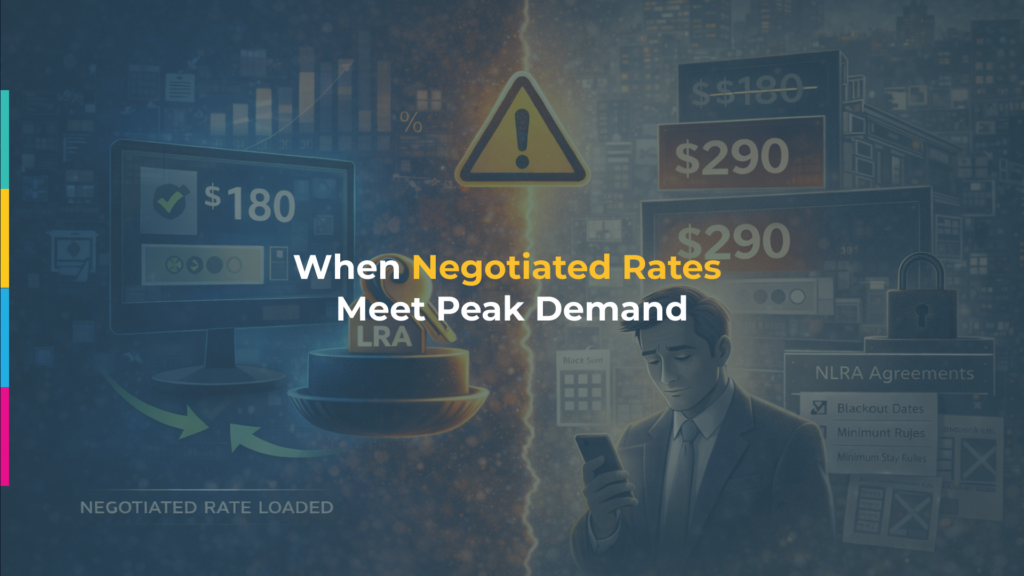
Why Do Negotiated Hotel Rates Sometimes Fail During Peak Demand?
Negotiated hotel rates may not be available during peak demand because availability is governed by agreed contract conditions, inventory controls,…
Read more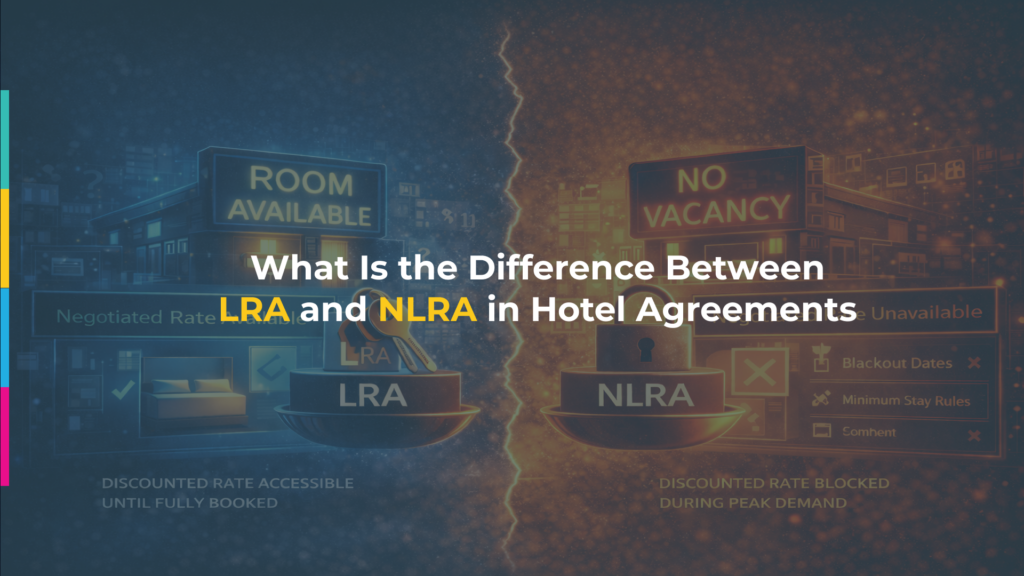
What Is the Difference Between LRA and NLRA in Hotel Agreements?
LRA (Last Room Availability) and NLRA (Non-Last Room Availability) define how negotiated corporate rates apply when hotel inventory tightens. LRA…
Read more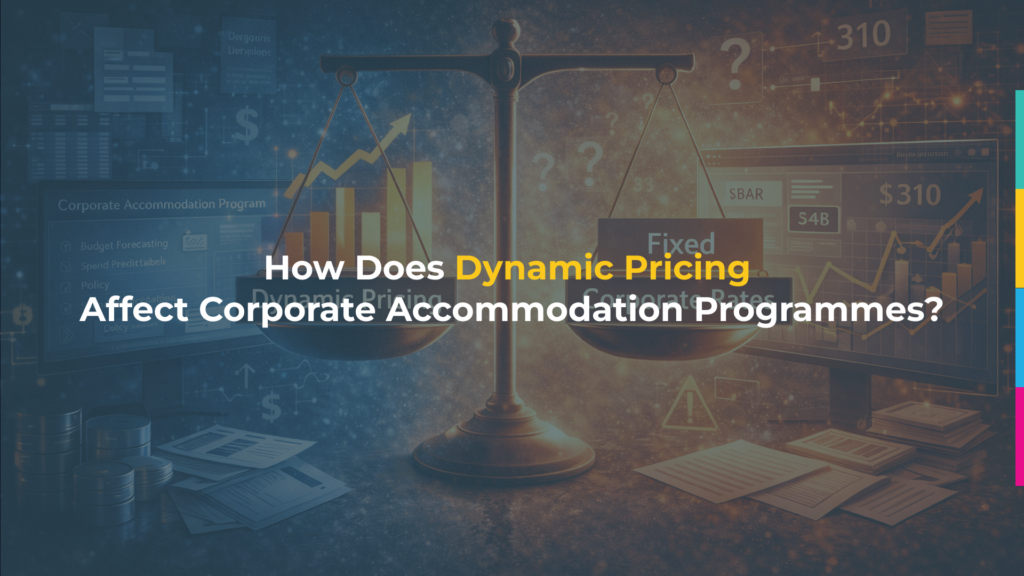
How Does Dynamic Pricing Affect Corporate Accommodation Programmes?
Dynamic pricing affects corporate accommodation programmes by introducing continuous rate variability driven by demand, availability, and revenue management systems. While…
Read more