Back to list
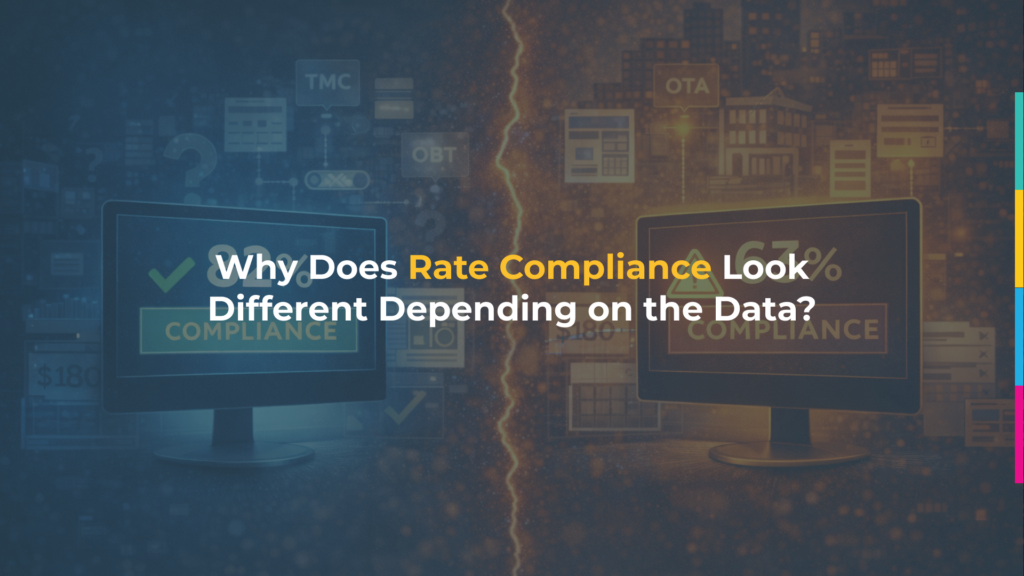
Rate compliance is difficult to measure because corporate accommodation programmes operate across multiple booking channels, data sources, and rate structures. Even when negotiated rates exist, inconsistencies in availability, booking behaviour, and reporting systems can create uncertainty about whether travellers are actually accessing agreed rates.
The Compliance Assumption
Corporate accommodation programmes often operate on a simple assumption:
If negotiated rates exist, travellers should use them.
In theory, measuring compliance should therefore be straightforward.
In practice, however, many programmes struggle to determine whether travellers actually accessed the intended rates — or whether those rates were available at the time of booking.
Where Measurement Becomes Difficult
Several factors complicate rate compliance visibility:
• Multiple booking channels (TMC, OBT, direct hotel, OTA)
• Dynamic pricing environments where BAR fluctuates constantly
• Rate availability conditions such as NLRA agreements or blackout dates
• Incomplete data capture across fragmented booking sources
Because of this, what appears as non-compliance may simply reflect availability limitations rather than traveller behaviour.
The Availability vs Behaviour Question
One of the most common challenges is distinguishing between two very different scenarios:
1️⃣ Travellers ignored the preferred hotel or negotiated rate.
2️⃣ The negotiated rate was unavailable at the time of booking.
Without accurate availability context, compliance reporting can mistakenly attribute structural limitations to traveller behaviour.
The Data Fragmentation Problem
Even when organisations attempt to measure compliance accurately, they often rely on data drawn from multiple systems:
• Travel Management Company reports
• Online booking tools
• Hotel billing data
• Expense management platforms
These sources may define compliance differently or capture only part of the booking journey, making a consistent measurement framework difficult to establish.
Why Compliance Can Appear Worse Than It Is
Because compliance metrics often lack full context, programmes may report:
• lower compliance rates than expected
• unexplained booking patterns
• perceived traveller behaviour issues
In reality, many of these patterns reflect structural visibility limitations rather than intentional traveller decisions.
Structural Reflection
Rate compliance is rarely a simple behavioural metric.
It sits at the intersection of rate availability, booking channel visibility, and data interpretation.
Understanding these structural factors is essential before drawing conclusions about programme performance or traveller behaviour.