Back to list

Why Corporate Accommodation Underperforms Even When Everyone Is Doing Their Job
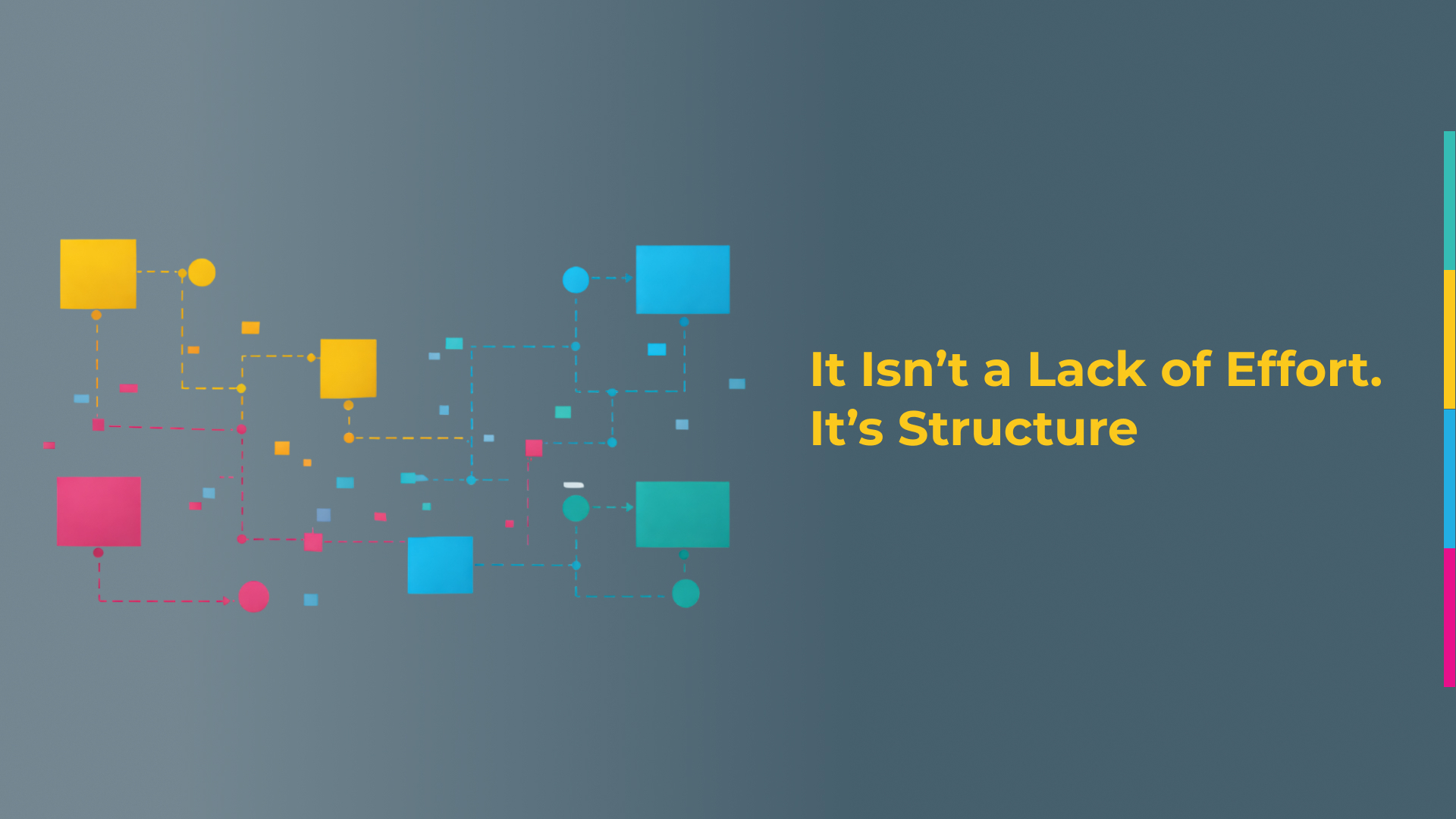
Corporate accommodation programmes often underperform not because of poor execution or weak compliance, but because structural fragmentation separates insight, sourcing, booking, and performance visibility.
Even when experienced teams work diligently across each stage, disconnected systems and delayed intelligence can undermine confidence, stability, and outcomes.
When corporate accommodation programmes underperform, organisations typically look first for behavioural causes. As a result, teams assume compliance needs improvement. In turn, leaders conclude that processes aren’t being followed. From there, some decide people need better tools, more training, or firmer discipline.
However, conversations with buyers, hotels, and intermediaries reveal a different picture. In most cases, participants aren’t disengaged or careless. Instead, experienced professionals work hard to do the right thing within the constraints they face.
So why do outcomes still feel fragile?
In practice, effort rarely causes the issue.
Rather, the structure introduces the weakness.
What Happens When Good Intent Meets a Fragmented Operating Model?
Corporate accommodation never developed as a single, connected discipline. Instead, it grew gradually in layers.
Initially, sourcing teams focused on annual rate negotiation. Meanwhile, booking teams prioritised availability and fulfilment. At the same time, reporting teams delivered retrospective visibility. Separately, compliance teams enforced policy adherence.
Individually, each function worked well. Over time, however, separation increased – not just operationally, but informationally as well. Consequently, insight generated in one stage of the accommodation lifecycle rarely reached another early enough to shape decisions.
As a result, many programmes now operate as a sequence rather than a system:
-
Teams analyse behaviour after it happens
-
Insight arrives once decisions are already made
-
Reviews follow outcomes instead of guiding actions
This pattern doesn’t signal weak capability. Rather, the way the model evolved created the limitation.
Why Behaviour Is Often the Wrong Place to Look
When results fail to meet expectations, teams naturally search for human explanations.
Why did travellers avoid the preferred hotel?
Why didn’t negotiated rates hold?
Why did nobody flag the issue earlier?
However, structure usually drives those behaviours. For example, late insight, disconnected signals, or invisible commercial logic at the point of booking force compliance to react rather than guide decisions.
As a result, people act only on what they can see and on what systems reveal at the moment choices occur. Under those conditions, asking individuals to “do better” rarely changes outcomes.
How Does Manual Effort Create Fragile Accommodation Programmes?
Across both buyers and hotels, one theme appears consistently: the growing amount of manual effort required to keep programmes running.
Teams produce more reports.
As a consequence, they add additional checks.
Over time, they chase more follow-ups.
Eventually, intervention becomes routine.
Many organisations interpret this activity as control. In reality, teams compensate for gaps between disconnected processes. Rather than working inefficiently, they work harder because the system no longer carries the load.
The real risk, therefore, isn’t inefficiency.
Instead, it’s fragility.
When programme performance depends on individual vigilance rather than structural alignment, confidence erodes quickly.
Why Optimisation Feels Permanently Reactive
Many corporate accommodation programmes still rely on periodic reviews to assess performance and identify issues. By the time teams surface insight, decisions have already occurred and behaviours have settled.
As a result, optimisation becomes a retrospective exercise:
-
Teams identify issues after they occur
-
They adjust parameters once patterns harden
-
They respond instead of steering
This outcome doesn’t reflect failed analysis. Instead, timing undermines impact.
When systems separate insight from the moment decisions happen, its value diminishes.
How Should We Reframe the Conversation Around Accommodation Performance?
Viewing underperformance as a structural issue changes the conversation entirely.
Instead of focusing on:
-
Blame
-
Enforcement
-
Surface-level fixes
Attention shifts toward:
-
How information flows through the programme
-
Where decisions actually take place
-
Why effort fails to translate into confidence
This reframing doesn’t solve the problem on its own. However, it establishes a more accurate starting point – one that reflects how buyers and hotels experience corporate accommodation in practice.
Starting With the Right Diagnosis
When everyone appears to do their job yet outcomes remain inconsistent, organisations shouldn’t demand more effort. Instead, a better response examines the structure surrounding those efforts.
Without that clarity, optimisation becomes a cycle of reaction. With it, teams can move beyond symptoms and develop a more durable understanding of how corporate accommodation programmes function today.
Ultimately, that understanding isn’t the solution – but it is the necessary diagnosis.
Read our full report – The State of Corporate Accommodation